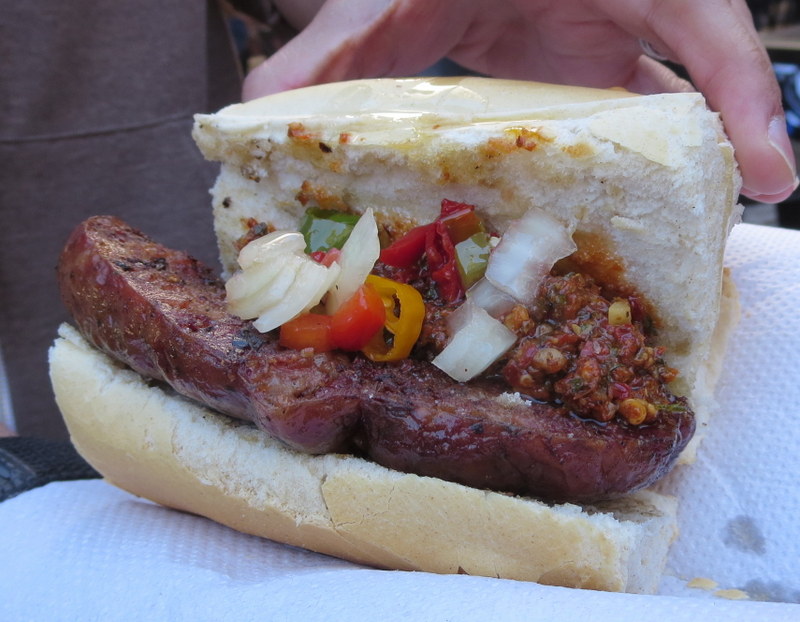
Regardless of what the Argentines can and cannot figure out, they got the food game down. Centolla, or spider crabs, a speciality from Ushuaia, alllll the way down south. This was cooked in a parmesan cheese sauce, and thus was delicious by default. 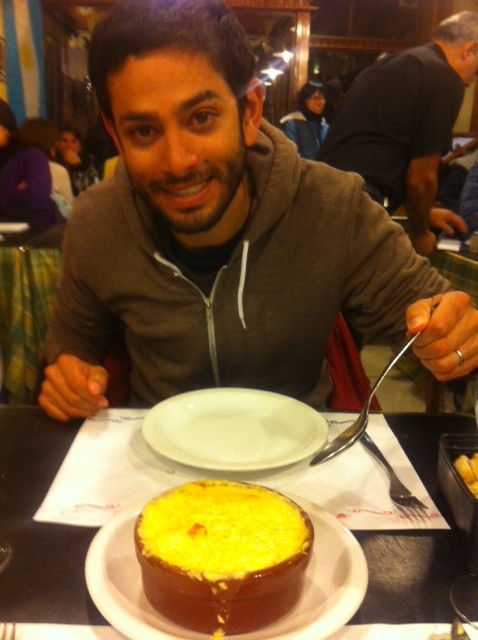 We lived off of Choripans for a while in Argentina, a clever combination of chorizos and pan (bread). Submerged in chimichurri sauce and plied with other vegetable-related toppings, this is a ubiquitous and tasty street food item.
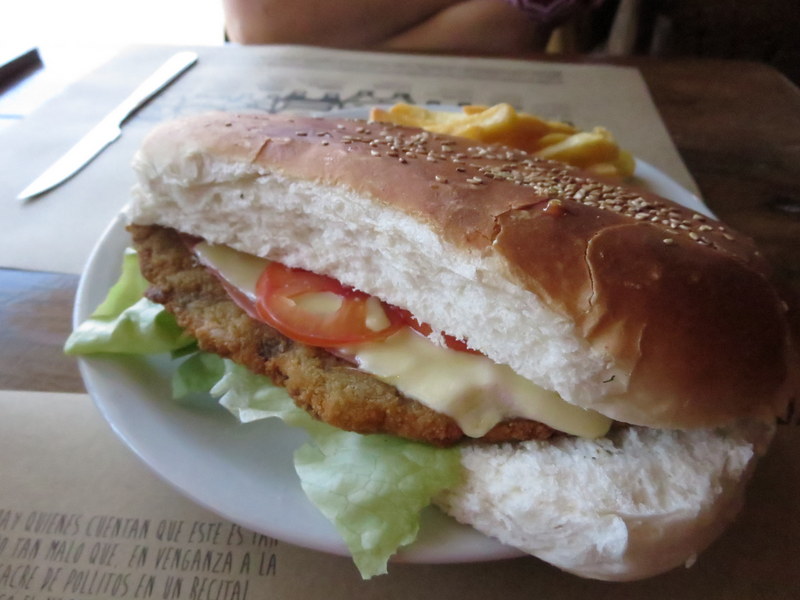
  And now we come to the most famous of all Argentine sandwiches, the Milanesa. In an attempt to rival the Chilean chacarero (but in between us falling a bit short), a thin strip of veal is breaded and then put on more bread. Milanesa can refer to a type of meat preparation as well – usually veal, but you can have chicken, pork, or even llama milanesas. Found all over Argentina, they are also typically as big as your face, but could use some sauce (i.e. aji from Chile as well! – ok fine, we just really want a chacarero instead).
  You can also get it not as a sandwich as well, for those more Atkins inclined (its still breaded and massive).
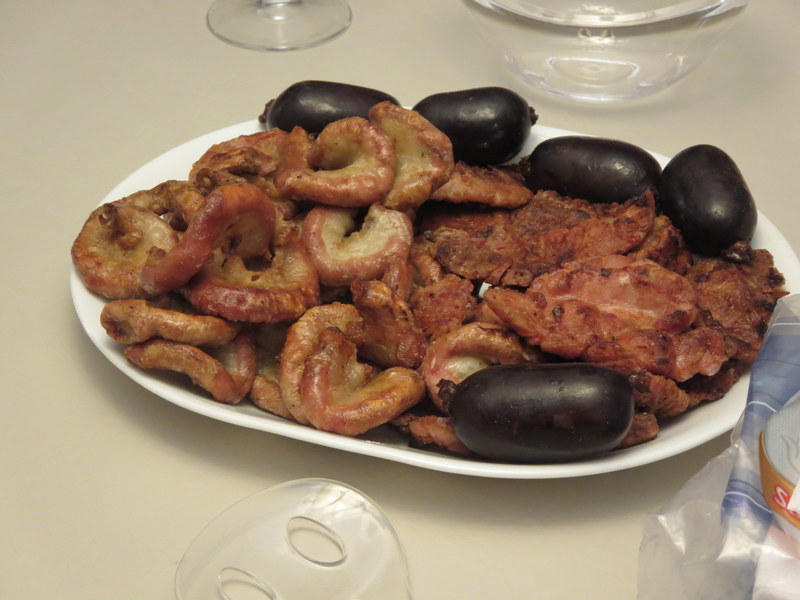
  A typical Argentina barbeque, filled with as many different types of meats as you can count, or an asado, is a blissful event. In this case, we had a combination of blood sausage, sweet breads, and intestines – nothing goes to waste.
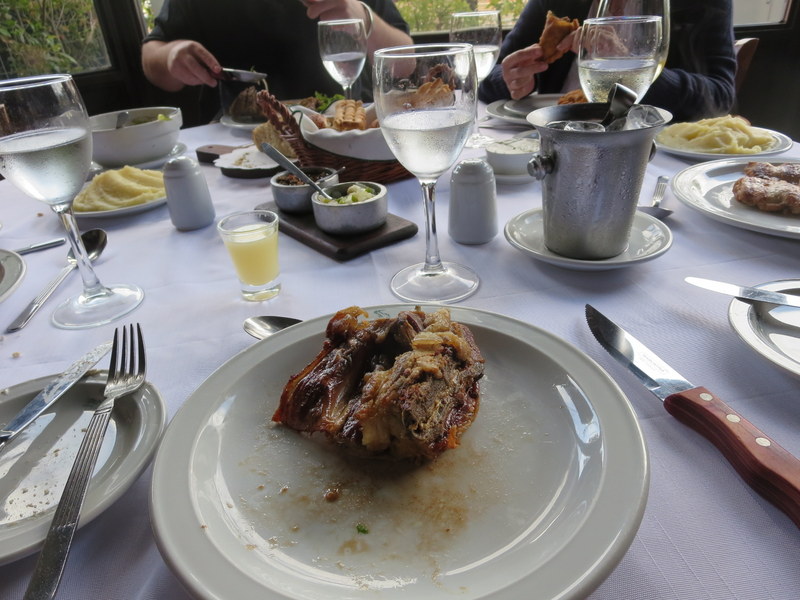
 Parillas (grill) restaurants grill up a lot of delicious things, but its hard to top the Chivto, basically a young goat. I could never be a vegetarian.
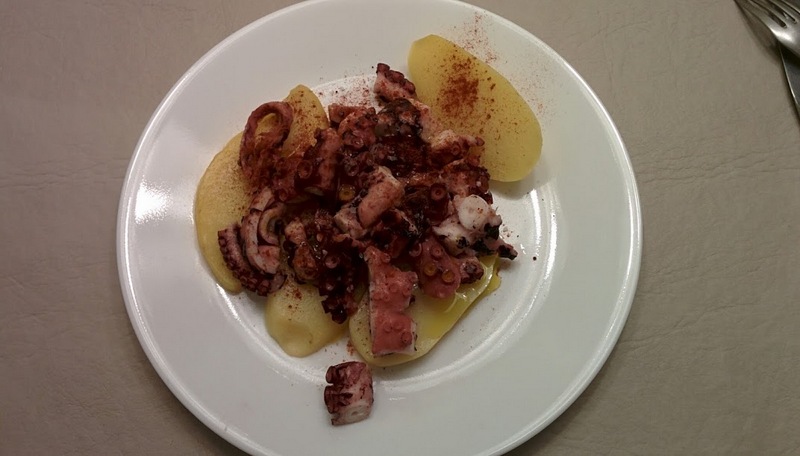
 Pulpo, or octopus – homemade in this case with potatoes, pepper, and olive oil. The Chinese in Buenos Aires apparently have the best octopus, which may or may not be manufactured in a factory.
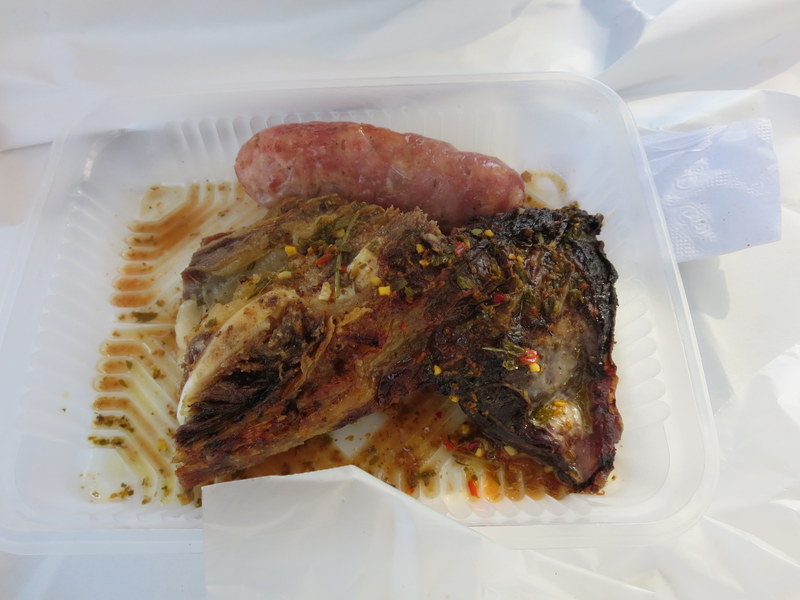
  Random places, such as a mechanical garage, will set up a Sunday BBQ outside, throwing tons of meat on the grill until they sell out. In this case, we came late but still managed to secure one of the last pieces of beef, and of course a chorizo – drenched in chimichurri as usual.
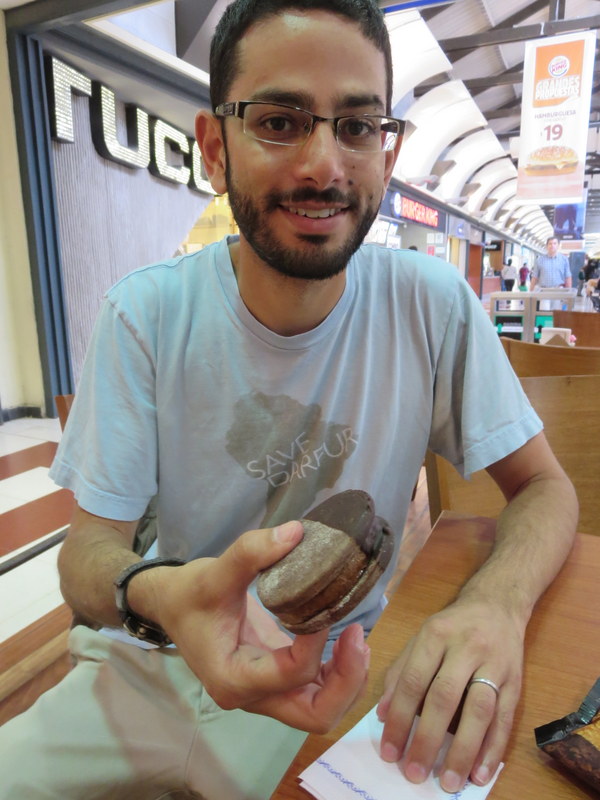
  Argentina bakeries are some of the best places on earth. Most of the cookies are alfajor based, or with dulce de leche in between two layers. These are also mainly dipped in chocolate, and thus are amazing. Trying to buy just one is simply impossible (something I attempted here, and come home with seven).
  Llama steak – we thought it was rare, but see it in Bolivia now all the time! Doesn’t make this first fancy foray into the world of llama consumption any less delicious.
  If you ever go to Argentina (or even South Carolina randomly), go to Freddo’s Ice Cream. Get any dulce de leche flavor, and then you can die a happy person. They even had an ice cream alfajor sandwich (something Christine simultaneously invented), but I’d stick to the ice cream itself.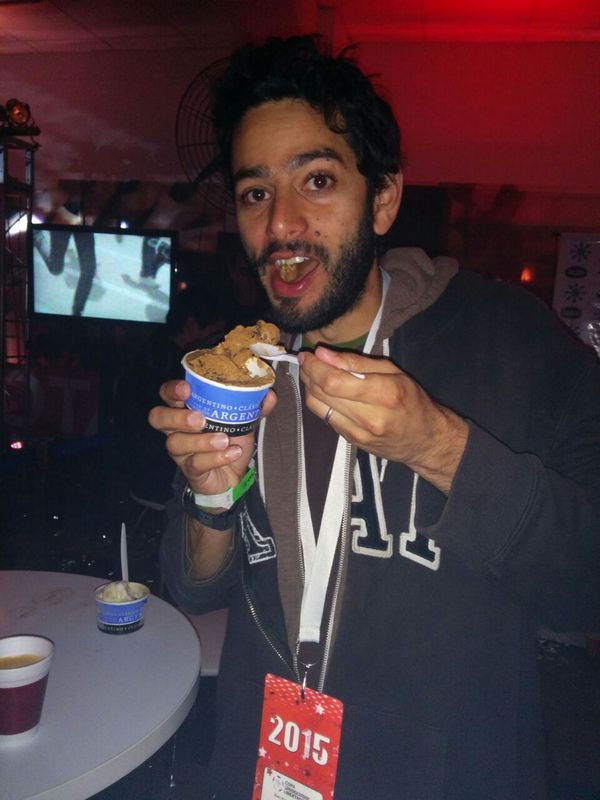
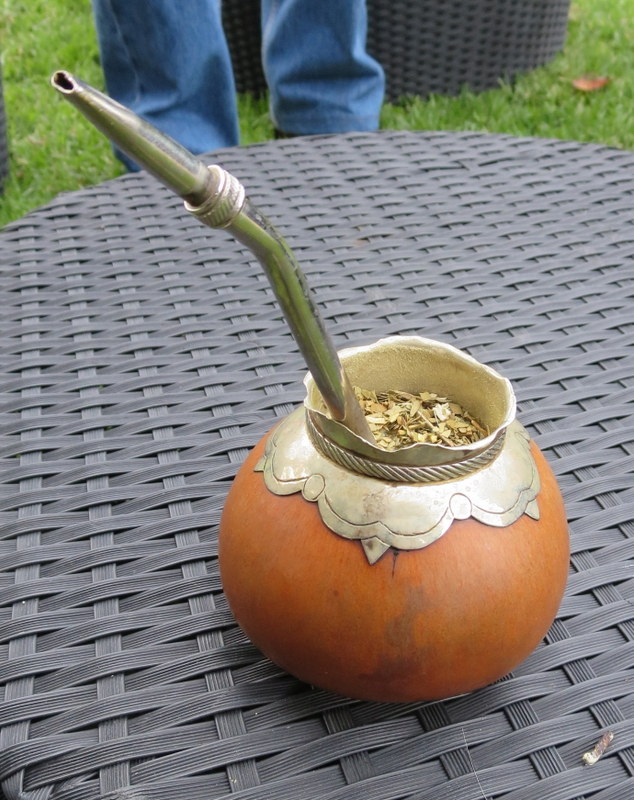
 In Argentina, but especially Uruguay, people carry unwieldy thermoses of hot water with them all over the place to make mate, a bitter looseleaf tea that you drink out of a open cup, often a gourd, via a metal straw with a filter on the bottom. Often a social activity shared amongst a group, mate is also highly caffeinated, and may help explains Uruguay’s recent decision to legalize certain substances as a counterbalancing effect.
  How could we go this long without talking about licuados? Take any fruit, add milk or water with a little sugar, and you’re good to go. Strawberry tends to be the most manly choice.
  Submarino, or basically make-your-own hot chocolate. You are provided hot milk and some chocolate on a stick, the rest is up to you (don’t worry, it’s hard to mess up – even if you look like a cartoon).
  Ok time to go eat!
Category Archives: South America Trip
A Culinary Tour of the Southern Cone – Part I
Everybody loves food, and even better to write about food is to show it! Now in Bolivia, we have completed our tour of the southern cone (which to me means Chile, Argentina, and Uruguay – but we visited Paraguay as well, so I’m just going to include it here). Given the length of time we spent and the variety of delicious foods, Argentina will just have to occupy its own forthcoming post (which will do little to diminish their ever-present vanity for all things Argentine).
Thus, a sampling of what we ate in Chile, Uruguay, and Paraguay:
Chile
Pino empanadas – beef, a hard boiled egg, and an olive. A Chilean classic!

The most famous of the famous Chilean sandwiches, the Chacarero. Along with half a jar of mayonnaise, the base is thinly sliced beef, fresh green beans, and spicy peppers. Best paired with aji, a delicious and salty Chilean hot sauce. It usually as big as your head, unless you have a really big head. We shared this one at supposedly the best chacarero place in Chile, Fuente Alemana
 Another famous Chilean speciality – the completo! A hot dog, or in this case two hot dogs, smothered in yet more mayonnaise, cheese, vegetables, and various other toppings. This was purchased from the also famous Sibaritico in Vina del Mar, where Anthony Bourdain even got one once. They also make their own mayonnaise there, so Hellman’s lost some business on that one.

Cuddly guanacos, a llama cousin, make for great photo opportunities, but also fit nicely on a plate.

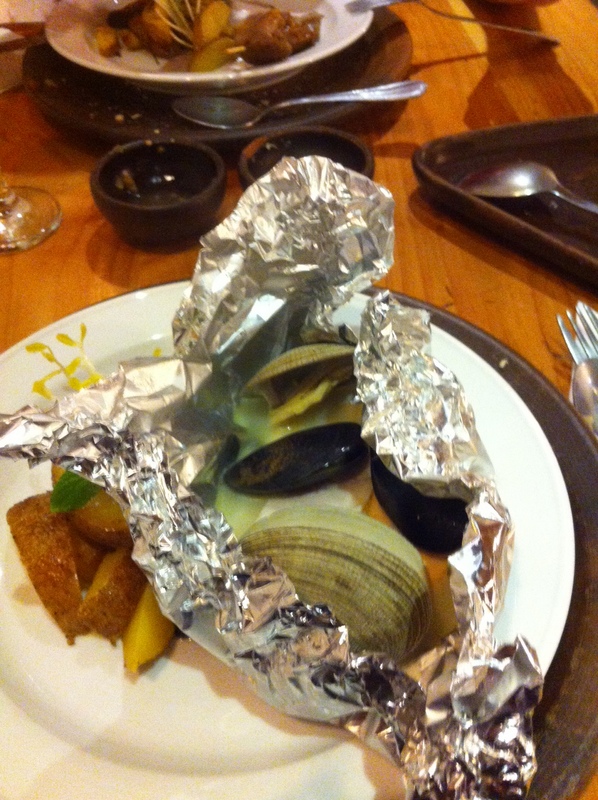
Curanto is a seafood medley encompassing clams, mussels and multiple varieties of fish, in addition to various meats and potatoes, all cooked in a hole in the ground. The tinfoil did not taste as good as the rest.
Churros! Need I say more?

Uruguay
Confusingly, the Southern Cone at one point ran out of food words, and starting using the same phrases in different countries to describe completely different things. Thus while Lomito refers to pork in Chile, in Uruguay it serves as the national beef-based sandwich, competing with the Argentine Milanesa and Chilean Chacarerro alike. Simple but with tender meat, Uruguay in our opinion takes home a well-deserved second place in the regional sandwich game (but don’t tell the third place Argentines that!)

While in Chile a large hot dog with everything you could imagine on it is a completo, in Uruguay it’s a pancho – both ertain the ratio of a kilo of mayonnaise per hot dog.

Uruguay also does up its Sunday bbqs – in this case we got a pizza chicken, or literally cheese and sauce atop a grilled piece of chicken.

Paraguay
Poor Paraguay is often overlooked, but it does has some specialties of its own commonly found on the street, such as a food drink salad and chipa guasu (i.e. Paraguay cornbread).
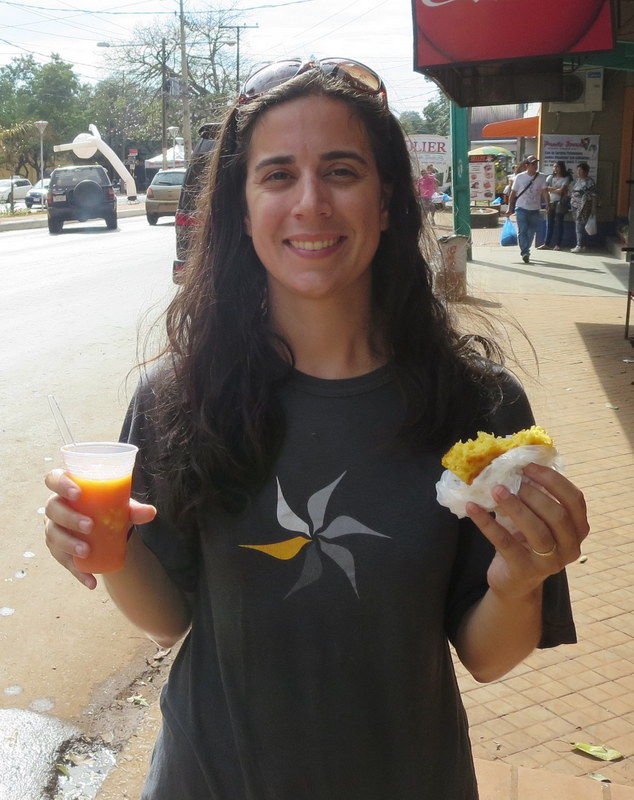
If you ever find yourself lost in the chaos of the markets of Ciudad del Este, take a deep breath, walk west, and don’t stop until you hit a Quiero Fruta. While juices are found everywhere in all four countries, this stand has it going on.

Meat is just often so much better when grilled on the side of the street. Throw in some yuca too for girth.

And of course, don’t forget that you can get an entire chicken meal for a few bucks!

The Trials and Tribulations of a Bolivian Visa
Visas can be a pain. The following is a not terribly exciting but more frustrating account of a multi-nation attempt to obtain one for Bolivia.
I hate visas. Really, it’s one of my four most hated things on this planet, along with mosquitos, the Cowboys, and genocide (in that order). So before undertaking our trip, I did my research to ensure we (re: I) wouldn’t run into any issues. Luckily for Christine, her Brazilian passport absolves her of all such concerns, in addition to the financial burdens associated with the right to enter various South American nations.
Of the countries we were likely to visit, Argentina, Paraguay, and Bolivia required paperwork. Argentina was easy enough – I just had to pay a $160 ‘reciprocity fee’ online (most of the South American visas derive of a similar revenge motivation, in which high fees are imposed on US citizens who wish to enter, are in return for the increased fees the US imposed on their citizens entering America – can’t say I blame them honestly and the visas are multi-entry long term affairs, but it still occupies a healthy chunk of the trip budget).
Paraguay’s visa could not be arranged on arrival, so I took care of that one at the embassy in Washington D.C. prior to departing. That only left Bolivia. According to all the information received, the visa could be arranged ahead of time for $160, or on arrival at both land borders and airports for $135. There is always a greater sense of security in obtaining the visa ahead of time, knowing that you won’t be turned away from the country, so it is generally one of the few things I try to plan in advance when traveling (except in the case of West Africa, as the Shark Force Five can attest to). Especially at random land borders which can be subject to the whims of whoever is manning the border at that particular point, having the visa in advance gives you so much more leverage. But given that the paperwork at land borders can be significantly lighter than going through an embassy, and that the Bolivian visa was actually cheaper on arrival, it seemed a no brainer to worry about it later.
When we arrived in Asuncion, Paraguay, I started to change my tune a bit. I read on a blog one horror story of an American girl who was turned away at the border (though I couldn’t exactly figure out why), while others we met who had come from Bolivia did not put too much faith in officials working the border we wanted to cross. The main issue is that we were planning on crossing into Bolivia from Paraguay via the Trans-Chaco route, which is 24-30 hour bus ride across a sparsely inhabited and harsh area (dubbed the ‘Green Hell’ by the Mennonites who went to settle there in the early 20th century). There are no real major urban settlements and only one road (which is just paved on the Paraguay side). The schedule of the daily bus ensured we would arrive at the Bolivian border around 3am, and the prospect of being turned away because the official on duty was cranky at still being awake that late in the evening, and thus being forced to wait hours for the one daily bus all the way back to Asuncion, seemed perilous enough that a little extra effort now to avoid such potential issues seemed like a good idea.
Unfortunately we didn’t really have the time in Asuncion, so we resolved just to go ahead with the border process – it’d be an adventure at least, and that’s what we were here for. We headed out to the Chaco, spending a few days in and around the main “settlement” of Filadelfia. While there I thought it might be a good idea just to call the embassy to double check one more time (you can sense the unusual level of anxiety I have with regards to visas, can’t you?). This call happened to take place on 02 June. I called the Bolivian Embassy in Asuncion, and surprisingly they actually answered the phone (before I had to call the embassy in DC each time to get a response, since apparently other regional embassies or consulates obtained phone numbers without installing actual phones in their offices). Of course, this phone call may have saved me in one respect, but also gave us a whole lot more trouble. Apparently as of 01 May, the policy for US citizens had changed, and they were no longer able to obtain visas on arrival. Fortunately, however, there was a grace period of one month, meaning that US citizens could still get their visas all the way up to 01 June. Unfortunately, however, the aforementioned date of my call occurred on 02 June.
That call initially gave us little recourse but to return to Asuncion and spend 4-5 days taking care of the process. A bit dejected at the prospect, I began to search around for alternatives. We had really wanted to cross from Paraguay to Bolivia as it’s an infrequently traveled land route (perhaps for a reason). But I discovered that in northern Argentina alone, there were four Bolivian consulates, given the number of Bolivians who migrate for work in their more prosperous southern neighbor. A quick call to the embassy in DC, given that those consulates and other regional embassies reverted back to their practice of brain cancer prevention by avoiding phones, confirmed that consulates would be able to issue visas as well. We kept calling around some more and the consulate in Jujuy finally answered the phone. The man on the other end had no idea if his consulate wielded such visa-issuing power, but he asked someone else who confirmed what the DC embassy had already confirmed (for visa issues, I seek double confirmation!). That meant no more Asuncion, we were headed to northern Argentina!
There are really worse places to be stuck trying to get a visa, but we hadn’t planned on visiting the northwest of Argentina, so we tried to spend as little time as possible on the actual particulars of obtaining the visa. We arrived in Salta, where there was a consulate, a bit after 9am. Quickly dropping off our bags, we found an Internet café where I could print all my documents and ran over to the consulate, getting there at 10:30am (not bad considering 14 hours prior we were far away in the town of Resistencia, waiting over two hours for our bus to arrive after suffering a mechanical problem, which also caused it to break down once during the overnight journey).
My biggest concern was that the consulate was for some reason going to say it didn’t have the power to issue the visa, and we’d have to take a long road to embassy in Buenos Aires. As we ran over, I was nervously envisioning such scenarios, and anticipating what our next move could be in the forever legendary chess match that had become me versus a Bolivian visa.
Arriving at the consulate, there was no one else there – good, no line. We went up to the front desk and I explained that I wanted to apply for a visa, with bated breath. The man at the desk said, and I quote, ”ok.” I was elated, all of this would end today! But then he asked which country, to which I replied the United States. This was not a problem (still elated!) usually, but . . . [translated via broken Spanish] “we have run out of the stickers.”
What?? The consulate literally did not possess any of the actual stickers to put in the passport signifying a visa, though just for US citizens of course. In all the doomsday scenarios I had envisioned in my head on the way to the consulate, this one did not even remotely not cross my mind. I asked if one might still be able to get the visa at the border, given the recent change in policy, but this individual could not answer either way – he literally did not even know his country’s visa policies (which made me start to think perhaps the real reason they ran out of stickers was because he had appropriated for his competitive sticker collection, he seemed like the type)
At a loss of what to do, I remembered there was a consulate in the town of Jujuy, about two hours north. I asked if they would be in possession of these precious stickers – “yea, they might.” Might, could you call your colleagues to inquire? No, he gave us the number and recommended we called instead. At the very least he could give us the address of the Jujuy consulate since it was clear at this point we were just going to have to go in person and try our luck. He debated with another consulate worker to ensure we got the “correct” new address, the only of our incredibly complex requests to which he was able to fulfill (somewhat – a little bit of foreshadowing here).
So we were going to have to go to Jujuy, which wasn’t such a bad situation as it was on the way to Tilcara, a pretty town we were planning on spending a night before heading to northern Chile. But really, all because of a lack of stickers?? (I even offered to let him use my own collection of Hello Kitty stickers circa 1989 that I always travel with, but he insisted they were not yellow enough).
It was a Monday, and we figured it’d be best to leave tomorrow and try to take care of this visa situation as quickly as possible, since we had a bus ticket to Chile for Friday morning. We went down to the terminal in Salta to buy our bus pass in advance for early tomorrow, so we could still get to the consulate to allow for plenty of visa waiting time before it closed around 11:30.
We found plenty of buses that go north of Salta along the route to Jujuy, with some leaving early enough in the morning. This would be pretty easy logistically, as according to Google Maps the Bolivian consulate was a convenient 11 minute walk from the bus station. However, it was odd that each time we actually tried to buy a ticket, the attendants said they weren’t going tomorrow. That was fine as there were plenty of companies, so we kept asking each one and kept getting the same response. Finally, frustrated, I asked one of them why not – he politely explained to me what was apparently obvious to him and everyone else in this country already – there was a nation-wide 24-hour transport strike in Argentina, that just so happened to be scheduled for tomorrow.
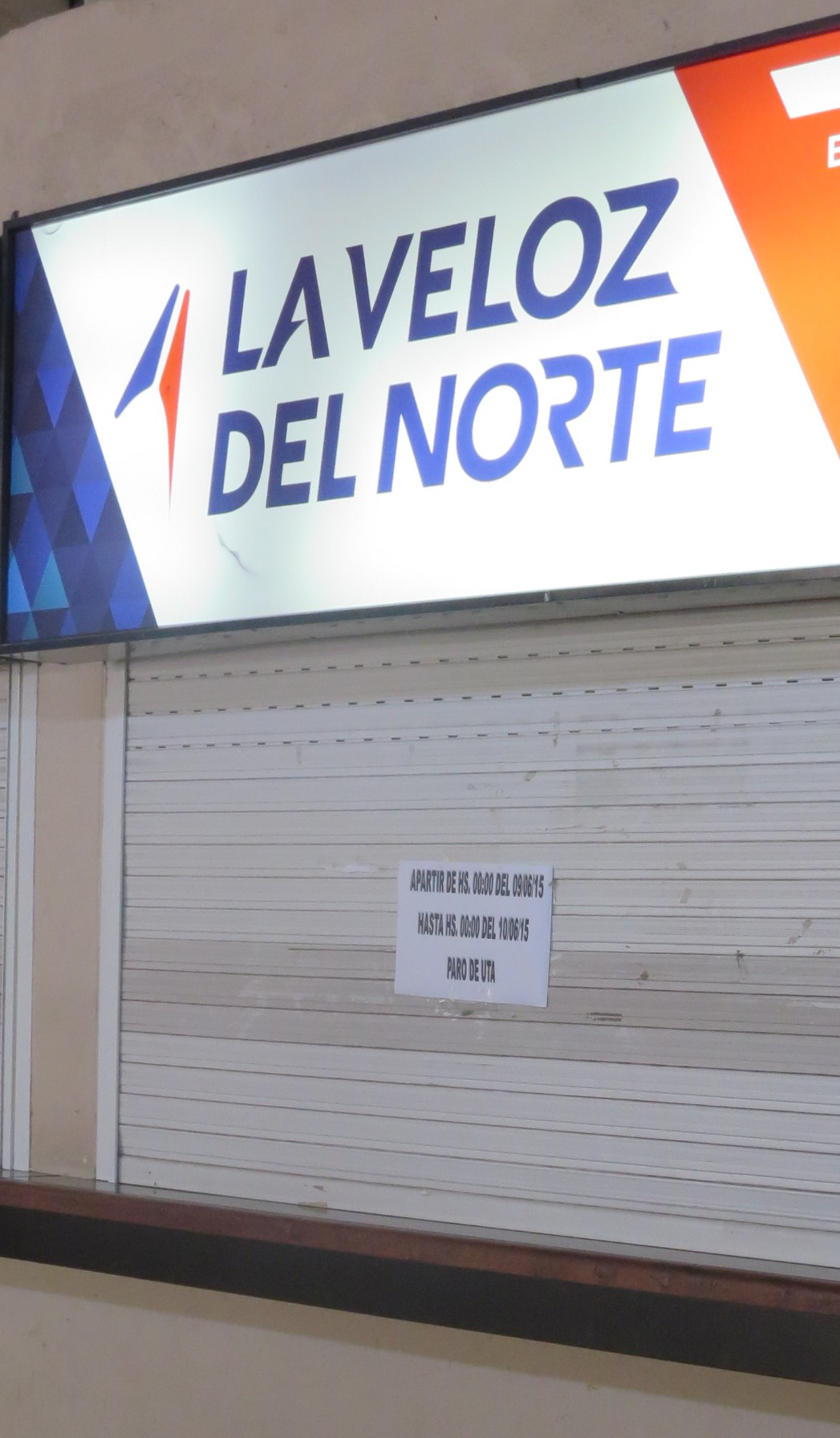
24-hour transport strike . . .
Fitting, with all transport halted (and routes likely to be blocked by protestors even if you took a private vehicle we were told), there was no way to get to the consulate in Jujuy tomorrow, another day wasted in what was quickly becoming an extraordinarily elusive Bolivian visa hunt. We waited out the transport strike on Tuesday in Salta, and arrived in Jujuy early Wednesday morning instead. Again, not a huge deal as it still left us some time, but these comical obstacles were mounting up.
Of course though, upon arrival in Jujuy on Wednesday morning, we discovered the bus terminal was nowhere near the consulate as Google Maps had promised. The terminal itself was actually a few kilometers out of town. Our bus was a bit later than expected, so we got to Jujuy after 10:00. We needed to make it to the consulate before 11:30, so eschewing normal procedure, we jumped in a cab rather than take a public bus. Of course (sense a theme here?) we hit serious bumper-to-bumper traffic, to which our cab driver expressed much chagrin, as in all his years driving around this town there was never a traffic jam at 10:30am. Turns out the main road was blocked by some (non-transport) protestors, who for reasons still not determined, had gathered around this one fancy-looking house that was heavily guarded by police folk. It looked like an intense stand-off, with many of the protestors waving signs with imprints of Che Guvera on them, but we didn’t have time in investigate. Going anywhere in a cab at this point was futile – we jumped out and decided to run past the protestors to the consulate instead.
At this point, I was convinced there was a higher power at work that so desperately did not want me to visit Bolivia. Perhaps it was for my own good, or perhaps Bolivia just wasn’t ready for me. Either way, there was no way this entire series of events could be just mere coincidence.

The house of the protestors, post-protest
It was about a 15-minute jog across the town of Jujuy, which is actually quite pleasing to the eye. At any rate, we made it to the address given to us by the consulate in Salta. When we had showed that address to our cab driver and told him we needed to get to the Bolivian consulate, he said he thought it had moved a few blocks away. I normally trust cab drivers since it is their profession to know where things are located, but we had just received this address yesterday, and I foolishly believed that the incompetence of the Salta consulate would not extend to such basics like knowing where its sister office two hours away is located.

Getting frustrated amongst the lovely backdrop of Jujuy!
We arrived at the given address, and it was a broken, seemingly abandoned building, with the outside gate locked. The door 20 feet in front of us was cracked ajar slightly, so we yelled out, with nary a response. This clearly was not the consulate. Thank goodness that our cab driver had been well informed (we got something out of paying him to drive us barely anywhere) – so we scoured around the next few blocks looking for a Bolivian flag. Luckily we found one without too much trouble, just two blocks over and up. But I was again left wondering, what exactly is going on with the Bolivian consulate in Salta?
No matter, we made it. It was about 11:00 now, so we were cutting it close especially since there was a line, but we were officially in the building before close. Smooth sailing from here I figured. Our documents were reviewed by a man sitting at a desk in the waiting area, who instructed us to wait for his female colleague in an office next door. I figured she would be the one to issue the visa, so I began to relax a bit.
We waited about half an hour while she dealt with some others, before calling us in. We tried to sweet talk here about Bolivia and our plans to visit her beautiful country (stressing the beauty part and leaving politics aside), which I think worked to a degree. She seemed genuinely interested in our travel plans, even putting in a plug for her hometown. A young, fashionable lady in her mid-30s, she explained that she was a traveler herself and recounted some of her own journeys in South America, establishing that she understood our frame of mind. Eventually she said everything was in order, and I thought she was on the verge of issuing the visa (we had made sure she had stickers in her possession!). Buuuuut there was one little problem – she actually didn’t have the authority to issue visas, and the vice-counsel had randomly left this morning and didn’t tell her when she was coming back.
No big deal, we can wait her out I said. So we returned to waiting area, hoping this main lady would return from wherever she was soon. We got hungry, so Christine went out to search for empanadas around 12:30. The consulate actually closed at 1:30 instead of 11:30, so that gave us some more time. Around 1:10, the fashionable lady came back over explained that the vice counsel was probably not returning, so we would have to wait until tomorrow for the visa. We had been on good terms with her, so I politely said that wasn’t going to work as we were leaving for Chile tomorrow (emphatically despite my complete lack of leverage in this case), and tried to push her for action by reminding her that we had been trying since Monday to get this visa (given the sticker incident in Salta, the transport strike, and now the mysterious and unexplained absence of the vice-counsel during the already abridged working hours of the consulate).
I think she truly felt bad for us, but explained there wasn’t really anything she could do. I hoped to guilt her into calling her boss by explaining our situation over and over, but did not overtly make such a request, as it seemed clear that she was not in a position to question her superior. I finally said it was fine, it wasn’t quite 1:30 yet, so we could wait in the small hope that the vice-counsel would somehow materialize in the next twenty minutes. I think our resolve surprised her somewhat, and she retreated into her office. A few minutes later we heard her talking on the phone. Lo and behold, just before 1:30 the vice-counsel lady strode in, and the fashionable lady greeted her immediately with my visa application.
They talked it over themselves and then approached me. The vice counsel lady said it was normally at least a 24-hour process to issue the visa, but they would make an exception in this case, and I could pick it up at 4:30 this afternoon. I couldn’t believe it, it was really happening! While we were waiting I had began stewing internally a bit, and decided if I did not get my visa today after so much effort, Bolivia was going on my blacklist of countries (of which India currently is the only one, having been denied a visa there previously). While Bolivia may not have be fully aware of existence or even the ramifications my list, as the fate of India since 2005 can attest, no country should want to be on the list. Teetering so close to the edge, Bolivia was saved by the timely intervention one of their saintliest citizens, who clearly called her boss in defiance of local customs, and told her to come back to work for us.
We came back at 4:30, I gave them $160, and they gave me a visa. It was legit, with a (non-Hello Kitty) sticker and everything. We thanked them, especially the fashionable young fellow traveler lady profusely, for without her I probably would’ve given up on the country in anger. It was about two weeks of a classic chase in the making, replete with some very random circumstances, but I got me a Bolivian visa!

Got the visa!
It really worked out in the long-run, as the abrupt change in policy for US citizens “forced” us to forgo what promised to be an awful 30-hour bus ride across the Chaco and spend a few days in Northern Argentina instead. Without such an outcome, I would’ve never seen this:

Post script: Of course, all of this was for naught. Despite the Bolivian Embassies in Washington D.C. and Asuncion informing me that it was no longer possible to obtain a visa at the border, that proved not to be true at all. At least in northern Chile, where many tour agencies operator cross-border excursion from northern Chile to the stunning salt flats of Bolivia, I could’ve definitely obtained a visa at this shack. Just goes to show you, when it comes to visas, no one really knows what they are doing (myself included)!

Bolivian immigration at the Chilean border by Uyuni
The Damn Itaipu Dam
A Guest Post by one Christine Ribeiro
On the Paraguayan side of the tri-border area (Argentina and Brazil) where you visit the Iguazu Falls, the main attraction is the Itaipu Dam. This dam was the largest in the world, until the Chinese built Three Gorges just recently. It provides over 80% of all of Paraguay’s electricity and about 15% of Brazil’s. In reading the brochures at the hotel, I discovered that the dam offered not only tours, but also a nighttime illumination show on Fridays and Saturdays. We happened to arrive on a Thursday afternoon, so I thought, we can do both, right? The only site to see, might as well. The hostel receptionist convinced us it would be best to do the tour that day and the lights the next night. We set out on a local bus and arrived about 45 minutes later. They information center sent us to an auditorium where we watched two 10 minute videos on the dam in Spanish, most of it above our heads. Then we got on a bus with the other visitors and went to see the dam. It spans the river between Paraguay and Brazil and thus, after crossing the Brazilian border earlier that morning, we crossed again, with no controls (again), to see the dam from both sides, before heading back to town in the local bus.

Dam in action!

Sunset at the dam
We learned that the next day, the bus could take us to the ‘light show’ but that it did not run late enough, so we would have to organize a taxi back. After two locals told us we absolutely had to do the show, with the lights set to music, we decided to arrange the taxi through the hotel. They told us the show was about 2 hours and so the taxi would pick us up at 9:30pm. At this point, I am very excited about the light show. I am imagining the Eiffel tower on Bastille Day, with lights and fountains choreographed to music. It was something not mentioned in the guide books, but what all the locals did. It was going to be great! We got on the local bus around 6:15, as check in was at 7pm. This bus was even slower than the day before and, as 7 approaches, my anxiety rises. I don’t want to miss the show. We get close the entrance, which we are familiar with from the day before, and I tell the bus driver but he refuses to stop. He tells me that is not where we go for the light show, and continues on a little while. I try to argue, but really, what do I know? He lets us off at the commercial entrance to the dam at 7:07. We are already late. We find a guard and he tells us that it used to be there, but that we would have to go back down the highway to the reception area. Anxiety levels rising. What are we to do but run down the highway in pitch black (sunset is around 5pm here) in our jeans through the humid weather. We make it to the reception at 7:15 with no issues, minus being out of breath and our jeans sticking to our legs from all of the sweat. We check in and they tell us the bus does not leave for the lighting until 7:45. So glad we ran. At least we didn’t miss it, right? We head to the water fountain we knew from the day before, behind the main auditorium, and chug three cups of cold water to try to cool down. There is live music playing and artisans selling. I relax now, knowing that we made, we were going to see the show.
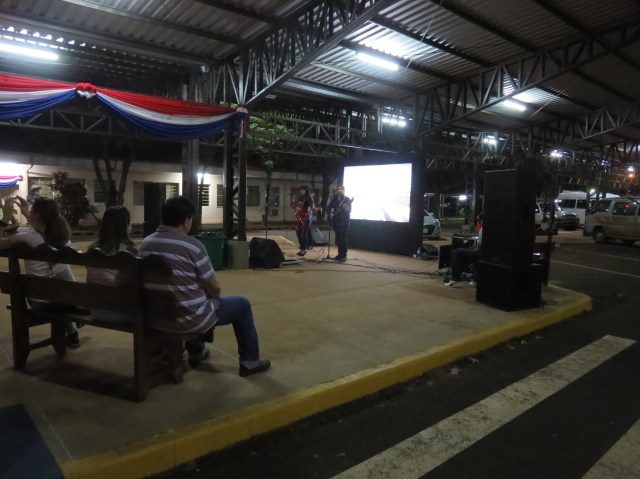
Concert in motion, time to relax

our favorite water fountain
We get on the bus and drive out to the look out spot on the Brazilian side (yet another uncontrolled border crossing for us!) and move up to the front row. The MCs come out for an introduction and say they are going to show a short documentary. Guess what, it is one of the two movies we sat through the day before. We sit through it yet again and then, the screens go dark and the music starts to play. This is it! The show is beginning. Over the next 5 minutes, dramatic classical music plays as the dam slowly lights up. And then, the show is over. I thought I was seeing a two-hour show, what is this bull?? Everyone else is oohing and aahing, snapping pictures, because, well, they had not been there the day before. What crazy person would come see this dam twice in a row?
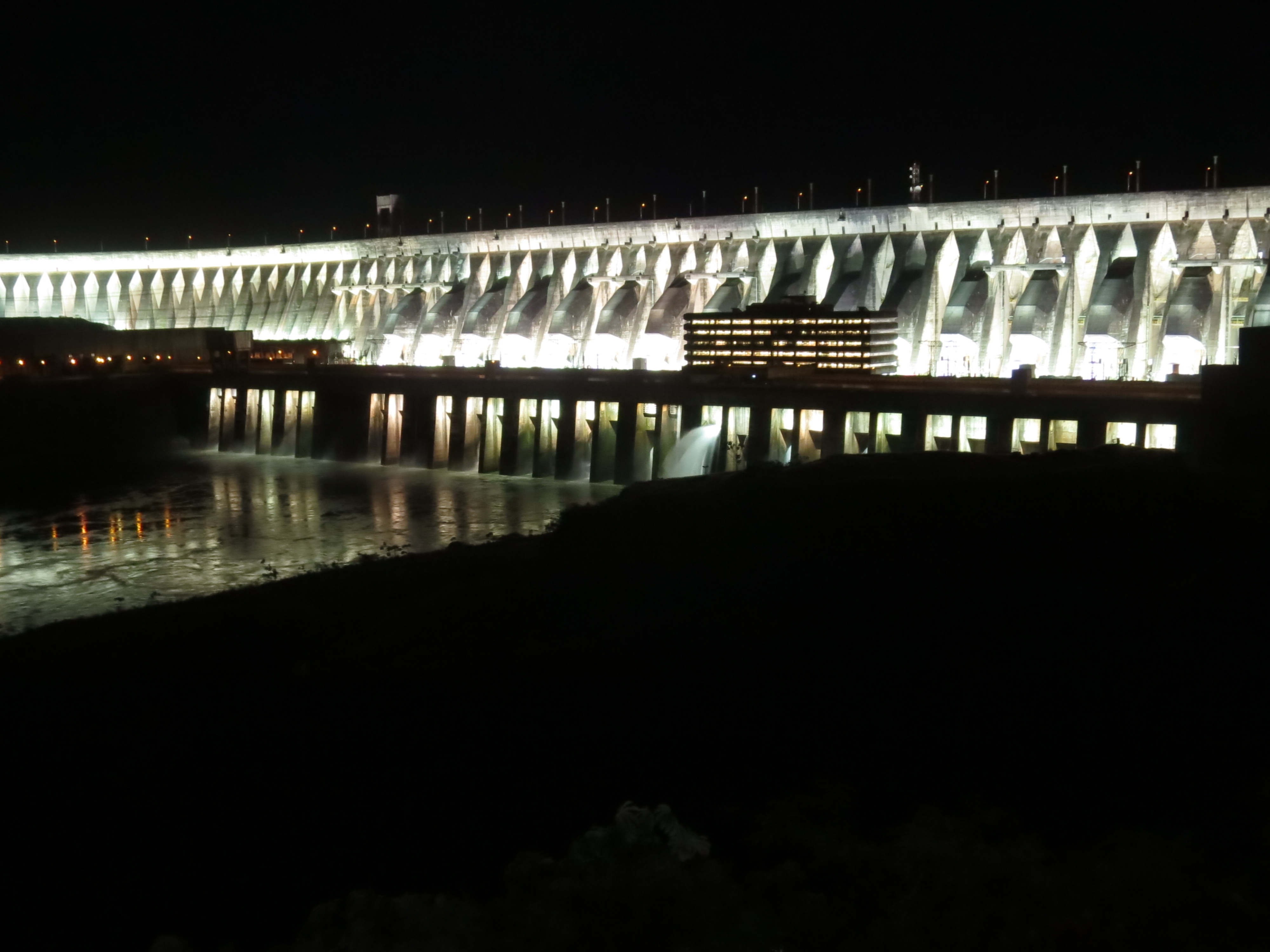
Illumination!
We head back to the bus, deflated. All of that effort, four total hours, for that? What is worse, we are back at reception at 9pm but our taxi is not scheduled to come for another 30 minutes, and there is nothing around us. Even the security guards for the dam come to check on us, given how weird it is to be lingering around for so long after the show and everyone else has left. In fact, the driver doesn’t even get there until 9:40pm. I guess there is a reason this is not written up in any book. At the same time, I can finally say I have fulfilled a life-long goal to see a 300 second light show at a South American dam while straddling two countries!

illumination selfie
‘Lawlessness’ in the Tri-Border Area
A quick Google search describes the Tri-border area between Paraguay, Brazil, and Argentina as “lawless,” “a classic terrorist safe haven,” and “Hezbollah’s Western Base.” Somehow they always seem to forget to mention it as the site of the spectacular Iguazu waterfalls – which are a rare mega-tourist attraction that lives up to all the hype. That was our main draw to cross through the region, starting one day in Argentina and ending in Paraguay, while spending the middle part in Brazil – but the allure to see how “lawless” this region actually is, was another significant draw.
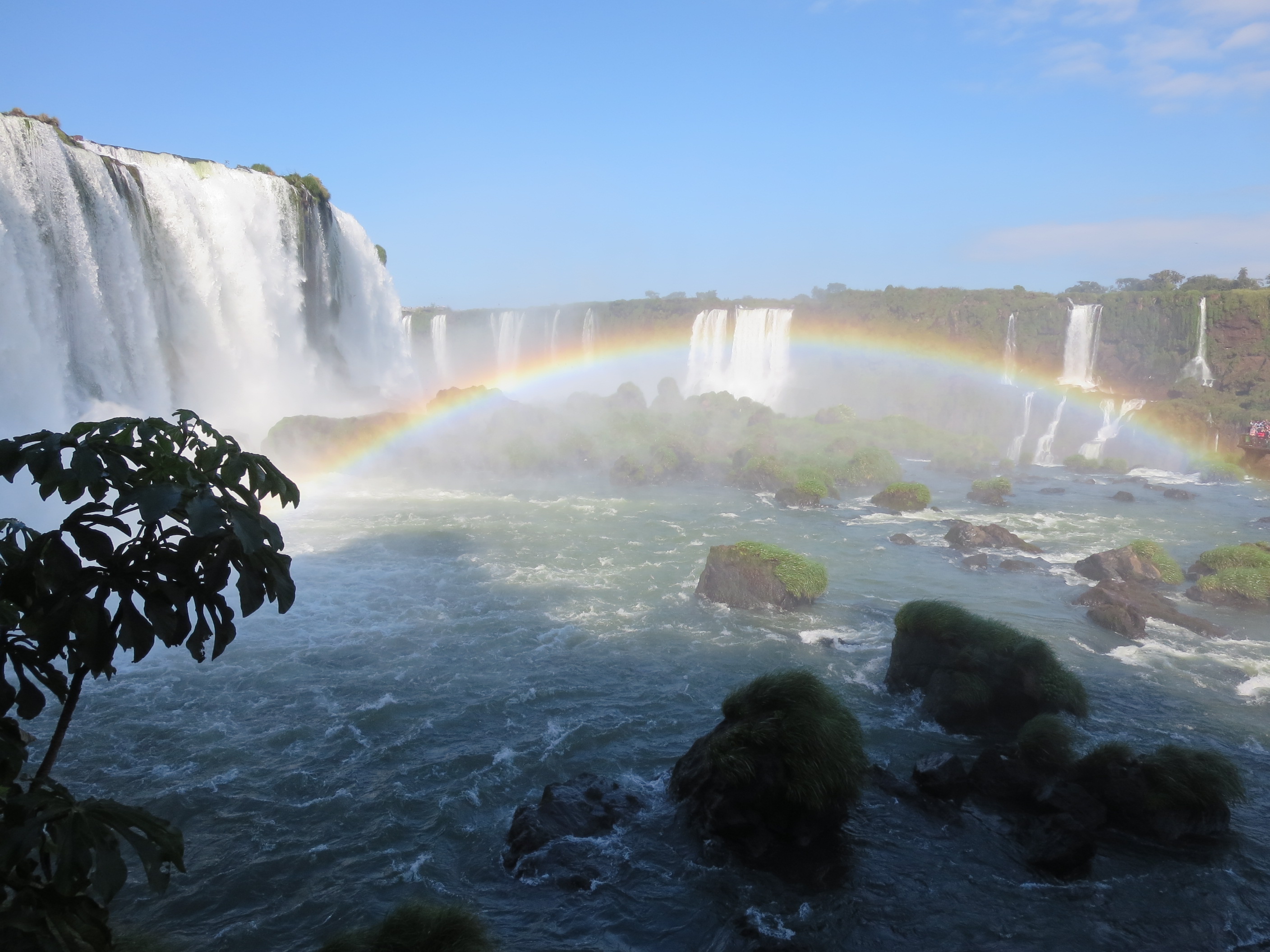
Also in the tri-border area
Much of the source of concern dates to the post-September 11th era, and fears that financing to terrorist groups such as Hezbollah, Hamas, and even Al Qaeda emanated from the area. Fears not necessarily unfounded without a body of evidence, but the true extent of the threat may have been exaggerated in some accounts. It was almost a niche sort of item in the terrorism studies field at the time, basically a way to show-off – “oh you don’t know about the tri border area?? Well let me enlighten you with my vast array of obscure terrorism-related knowledge . . . “
The region is home to an estimated Arab community of 25,000, who mainly came from Lebanon after WWII and during the civil war in the 1980s. Combined with its renowned reputation as a contraband “oasis,” concerns were raised to the point where the United States even established a joint intelligence center on the Brazilian side of the border. At any rate, much of that concern dated from the mid-to-late 2000s, with nearly half a decade elapsing by the time I showed my face in the area (which perhaps is never a good thing in the vicinity of a Middle Eastern-focused intelligence center, especially two months into a beard).
Starting in Puerto Iguazu, Argentina that day (we had seen the Argentine side of the Iguazu waterfalls the day prior), we left early on a bus for the Brazilian side of the falls. The border processes there were simple enough – on the way past the Argentine side, our bus driver collected all of our passports and got the exit stamps himself, while on the Brazilian side we had to individually appear, but it went quick enough (note: want to talk about suspect financing?? I had to obtain a Brazilian visa in Buenos Aires for $160 just to be able to visit the falls! Even if it is a ten-year, multi-entry affair).
We toured the Brazilian side, which offers significantly different but equally as stunning views as the Argentine side, then made our way on a city bus to the main terminal in the Brazilian city of Foz do Iguaçu. Things began to get a bit more interesting here – there is a normal city bus that runs between Foz do Iguaçu, Brazil and Ciudad del Este, Paraguay, as they are just across a bridge over the Paraná River from each other. We waited at the stop for the frequent bus, and headed for what was technically the fifth country of our trip (if you count 5 hours, at the cost of $160, in Brazil).
I had read a bit before that this border crossing can be a bit confusing, as most people do not stop to do the border check. That is correct – the bus typically just runs in between both countries without stopping at all between the borders; rather it is up to the individuals on the bus to decide whether or not they are in the mood to chat with customs and immigration authorities that day. It is this sort of lax approach to border controls that led Ciudad del Este in particular to be described to us as the “contraband capital of the region,” in turn igniting similar fears with regards to support for terror networks from certain communities in the area (I still have no idea why this border has developed this way, and wondered if it could really be possible to just fly into Paraguay and travel throughout Brazil without an expensive visa, if you entered and left the country through the tri-border area?)
Anyways, we had to get off the bus to get a Brazilian exit stamp (or rather I did), so we told the bus driver at the beginning that would be the case. He handed us a slip of paper so we could get back on a different bus – as this one would not wait around for us to complete our formalities. We got off at the border control, willingly I might add, while the bus plowed across the bridge, barely even slowing down. It took us about 5 minutes to complete Brazilian immigration (given that we were the only ones who showed up), then waited for the next city bus to come. We contemplated walking across the Puente de la Amistad (Friendship Bridge) as it was broad daylight, but had heard rumors that this was not safe at all, Not sure how really – it was had a narrow pedestrian walkway on either side – maybe someone could pin you against the edge and threaten to push you off whole taking your bags, but it was crowded and narrow enough that I would doubt they’d get too far. At any rate, we did not bother to find out, as the next bus came in less than seven minutes.
We flashed the slips of paper handed to us by the other bus driver, and hopped on the back. Once we had crossed the bridge we expected the bus to stop at the Paraguayan border control, so we could get off and complete formalities there – a reasonable expectation in my mind, even if most people do not get off the bus. This it did not do. Rather it sped right across the bridge and past the apparently optional immigration office into town – we were already in Paraguay!

the site of our illegal entry into Paraguay!
We cried for the driver to stop, not wanting to invite any sort of troubles for illegally crossing over. He did a few hundreds meters past the border and at the start of the expansive contraband market that dominates the first few streets on the Paraguayan side (although there a number of geographically-oriented and orderly shopping malls as well, such as ‘Mina India’ and ‘Bonita Kim’). Getting off we looked around confused – maybe that wasn’t the actual border post and we were supposed to go a bit further? But we were clearly in Paraguay now – you could tell immediately upon crossing the bridge that this was a much poorer country (street food, market stalls, dust, taxi drivers harassing us – you name it, all the elements were there).
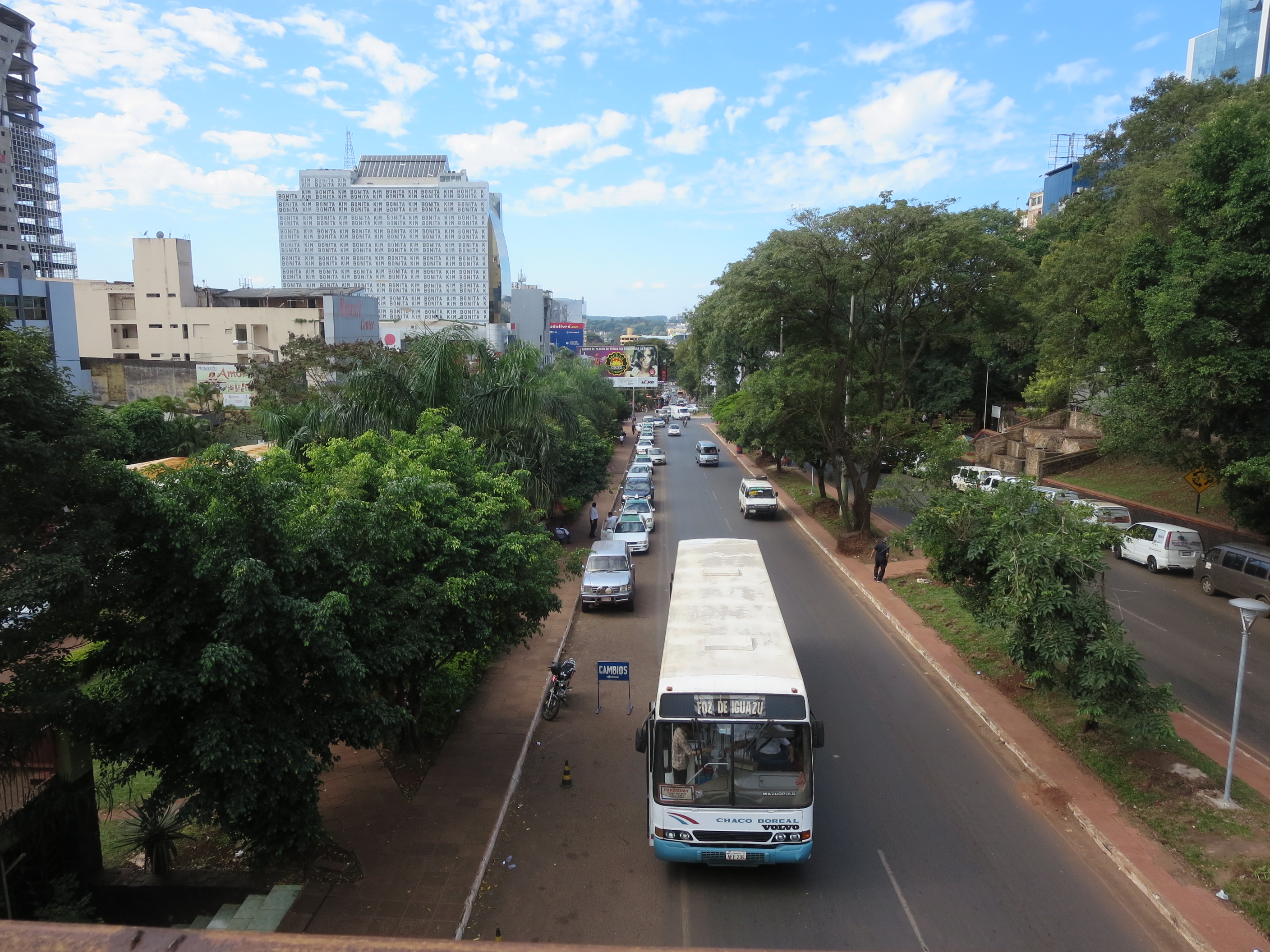
the path towards Brazil
We decided to walk back to the office immediately after the bridge – they could redirect us if they had to. We went in the first door we saw, hoping no one realized we were coming from the wrong direction (i.e. from Paraguay already), and encountered an disinterested man sitting at a desk, a tv blaring beside him. I approached and he did not look up initially, but grudgingly turned to us – I guess since this border process seemed to be “optional,” with most people choosing not to exercise that option, he did not quite have the experience or people skills I would’ve expected.
He looked over my passport and visa in less than two minutes, giving me an entry stamp. I was surprised by how quick this was, how few (re: none) questions he asked, and the fact that he did not appear to care about the contents of my luggage, nor barely looked at my face to confirm the passport. I was so taken aback that I asked in broken Spanish if there was anything else we needed to do, since I personally love completing as many formalities as possible at South American land frontiers, but he just waved us off to be gone (actually, I had read some horror stories of people not receiving the proper entry stamps during some of their South American travels and being forced to return to their point of entry to acquire them before they could exit the country, so was determined not to let the laziness of an apathetic border official put us in a similar situation).
Following we went back to the area we were dropped off, and boarded the next and third city bus of our 30-minute journey, unsure of where it was going or even if it was the right one (turned out to be fine). It took us past the market section of Ciudad del Este – which actually is a bit chaotic but replete with anything contraband you could want, from electronics to clothing to kitchen goods. A lot of likely not contraband goods as well – we saw an entire selection of Kirkland Costco products in the upscale Mona Lisa department store – and Brazilian & Argentines frequently cross the border to purchase supplies (when you are not slowed down by any border controls, why not?). We even had a tour guide later at the grand Itaipu Dam tell us you could buy a brand-new car for $200 in Ciudad del Este – an intriguing idea, but given my inability to drive without endangering the lives to today’s precious youth, one we never looked into.

shopping galore
Anyways, Ciudad del Este, Paraguay, the heart of all this ‘lawlessness,’ is actually a very pleasant city after leaving the market area. At the same time, there isn’t much else to do there – everyone we asked just told us to go shopping, especially given that the city was only established in the 1950s and thus lacked the deep history of monuments, buildings, and other pretty things to look at that occupies our time in many a other locations. Regardless, we stayed about a 20-minute walk from downtown in a newly-constructed suburb around a lake, at a hostel with a great view and a pool. So nice it was that Christine, who was previously scared to even set foot in the city after I had informed her of its reputation, expressed serious consideration into purchasing property there (it did help that we also located the best empanada and juice spots of our entire trip nearby). We never did get involved in Ciudad del Este real estate market during our short stay, but at the rate of $200 for brand new cars, perhaps we should have!
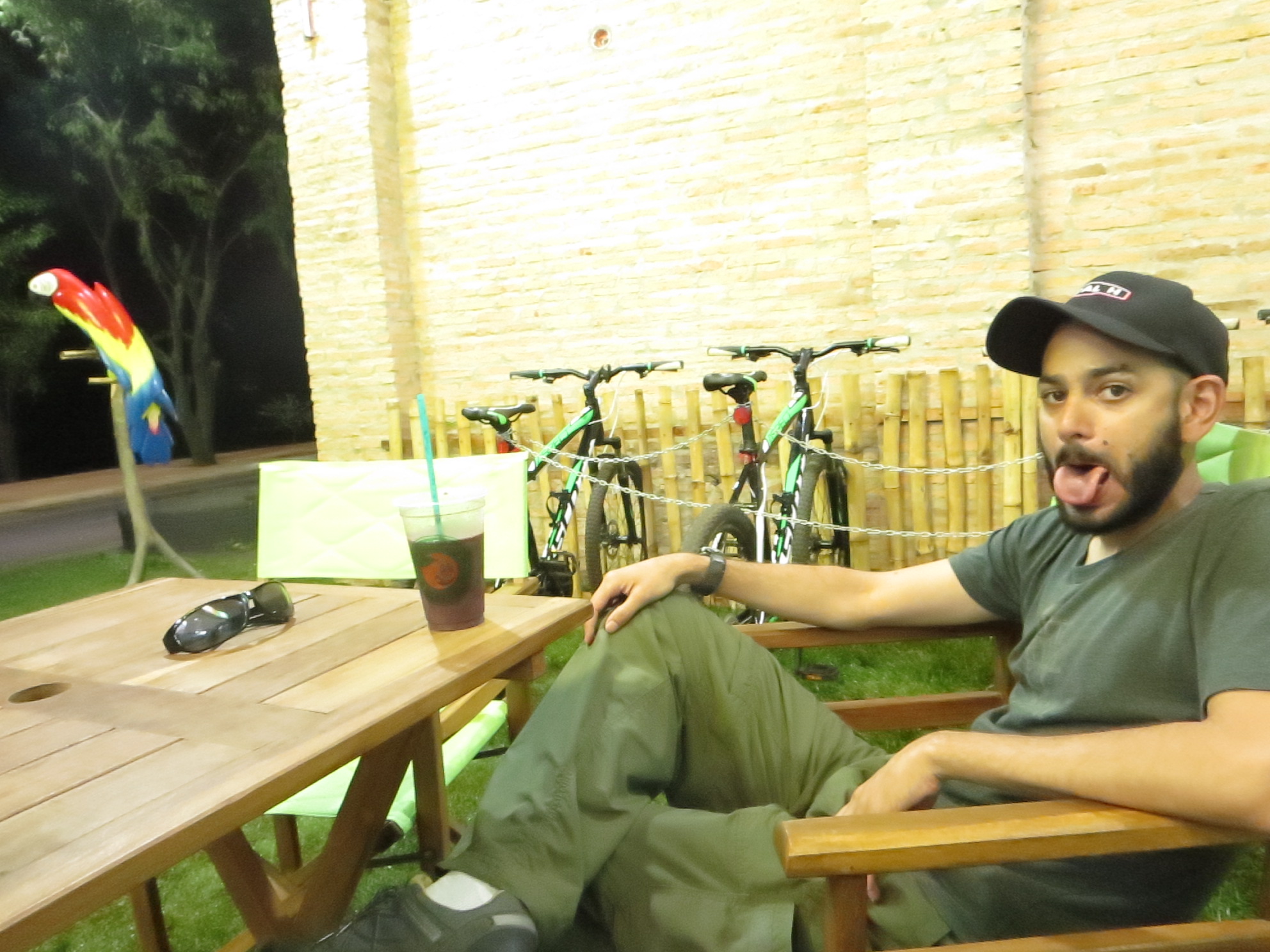
Quero Fruta juices – fit for lawless contraband smugglers and colorful parrots alike
I was also determined to find some of the supposed ‘Arab’ terrorist sympathizers, and we did (well the Arab part at least)! Mainly we were in it for the food, hoping to score some delicious shawarmas, as we stumbled upon a tall green building in the city center, which contained a food court, barber shop, mosque, and apartment building. The shawarmas lived up to their billing, and as much as I was intrigued, we left discussions of political allegiances and sympathies to a minimum.

a mosque, apartment building, food court, and barber shop all in one!
In short, I can see that the lax (or non-existent) border controls in the area and the endless rows of shops and markets stalls plied with counterfeit goods (along with ever-menacing ‘Arab’ population) in Ciudad del Este may give rise to concerns for some, but calling the region ‘lawless’ is simply inaccurate. Perhaps many of those articles were written from afar, but from our experience on the ground, admittedly a few years later on and without serious investigation, it seemed more an intriguing mix of cultures and an orderly-enough place, despite the lax border controls between neighbors who evidently feel comfortable with each other’s citizens. So nice it was, that we may even be future property investors!
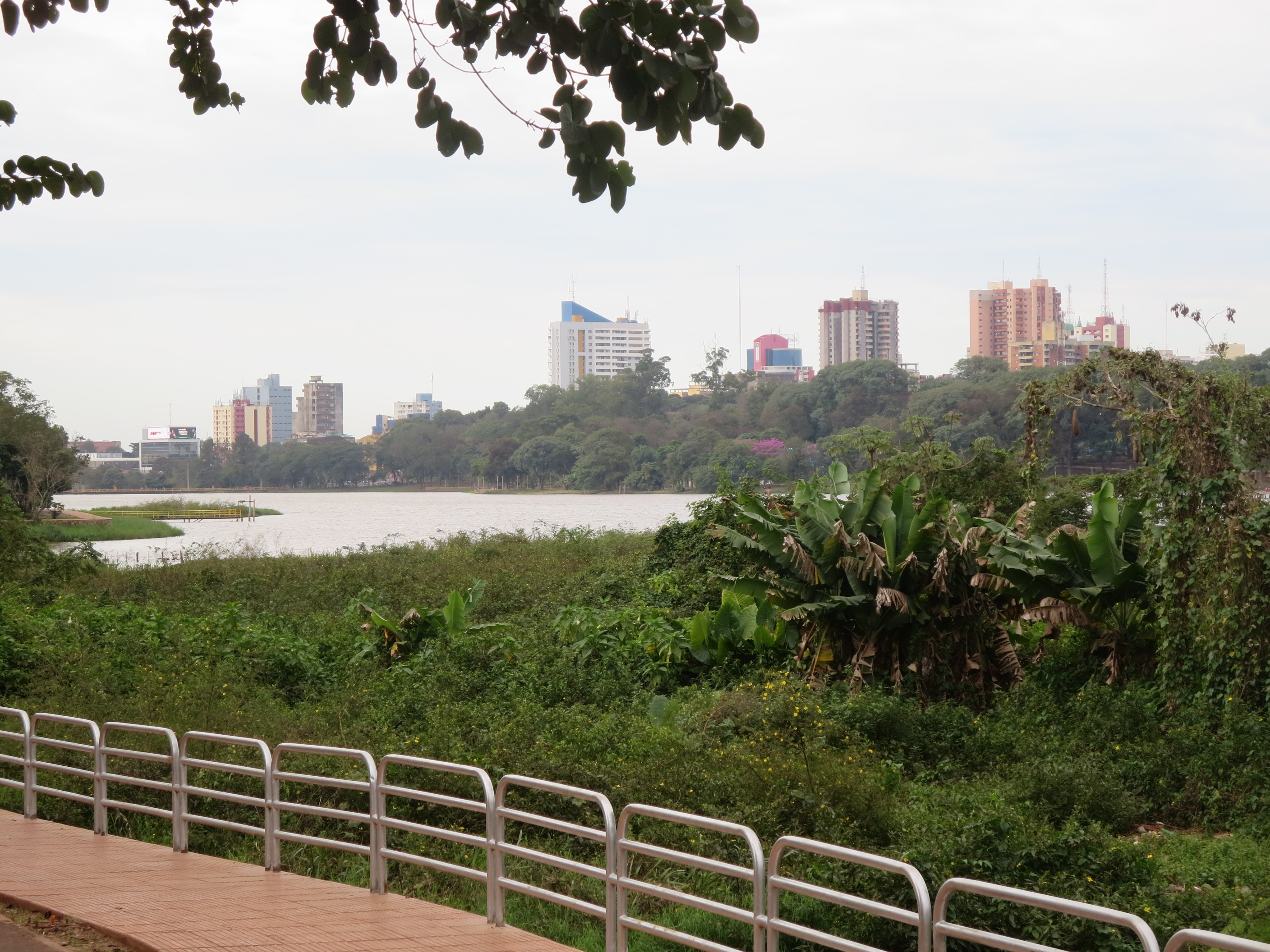
Not a bad spot to hang!
Nothing to See, But Don’t Keep Moving!
A Guest Post by Christine Ribeiro
When talking to other backpackers or looking at travel itineraries through South America, two countries tend to get left out of the routes: Uruguay and Paraguay. While we certainly enjoyed the sites we saw in Chile and Argentina, we were excited to head off the beaten path and explore places most did not. Thus, expectations were high when we took the boat from Buenos Aires to Colonia, Uruguay, the only site in Uruguay to make it into the top sites in South America in our travel guide.
Colonia is an old colony town that was well preserved and supposedly very picturesque. We got in at night and walked around the more modern part of town, saving the historic section for the next day. We got there and walked every street of the 5 block by 5 block old section in under an hour. While certainly nice, it was not what was expected from something on the same list as Macchu Pichu and the Galapagos. I am pretty sure they were just trying to throw Uruguay a bone, so they had at least something on the list.

Suspiro street – all 100 meters of it
From there we headed to Montevideo, where we walked the old part of town (often used in place of Havana, Cuba in films) in under two hours and there was little left to see. We did a lot more walking and saw basically every park and beach view possible, but again, nothing remarkable.

Viejo Montevideo
As we made our way north to Tacuarembo, gaucho/cowboy country, the scenery was picturesque and the town quaint, but little more to see.
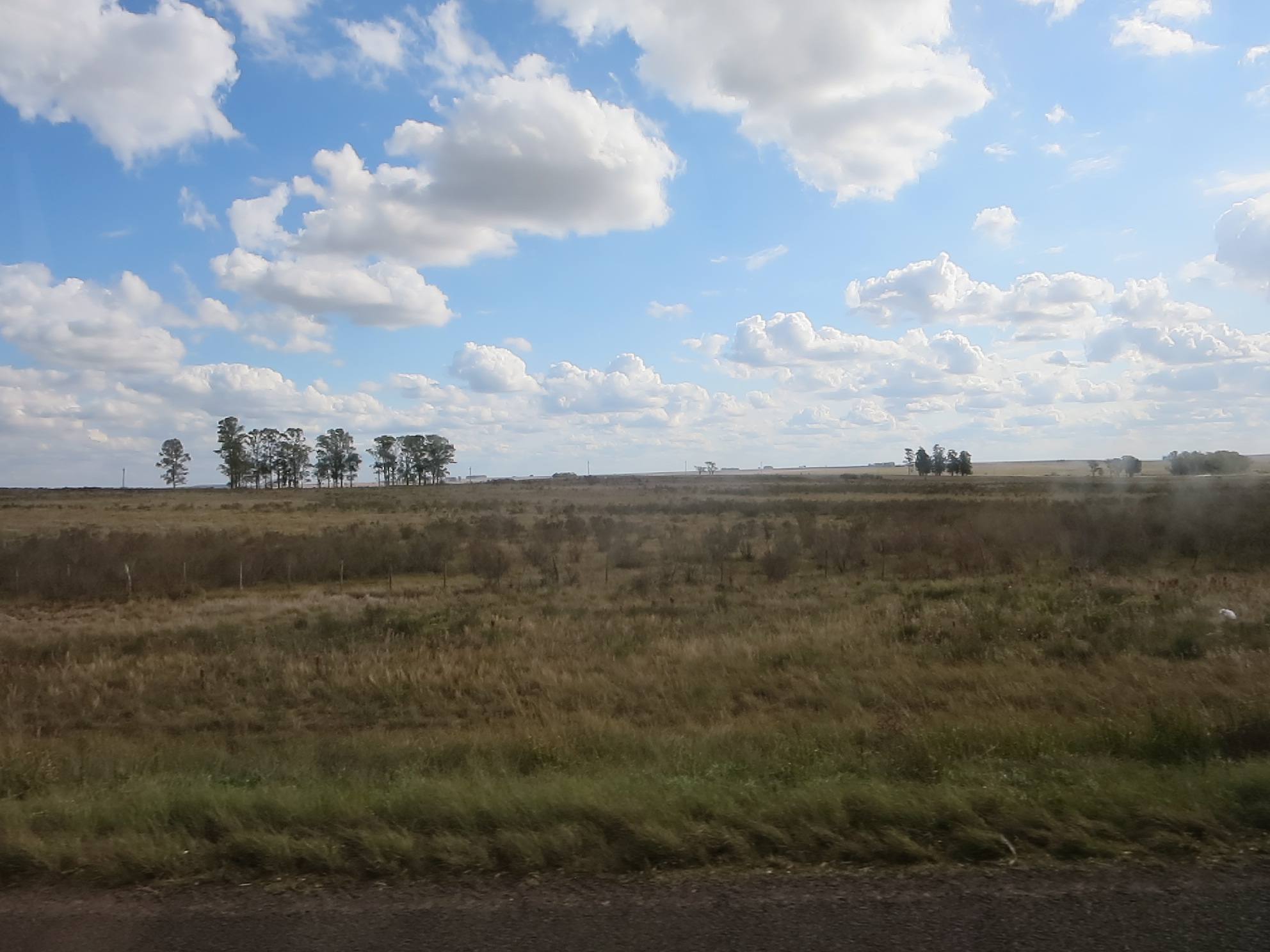
Gaucho land
Finally we ended in Salto, just over the border from Argentina, where this supposedly wonderful thermal bath/springs were. We arrived and it was basically a bunch of hot public swimming pools.

The thermal baths/public pools
While there is nothing remarkable that we can point to from our time in Uruguay, we both loved it. It had this laid back relaxed feeling across the country. Even in Montevideo, the largest city, no one was in a rush. Every day after work, the beach fronts were full of people sitting at benches drinking their maté (local loose leaf tea that you drink through a metal straw with a filter and is shared with friends) and watching the sunset. It is a vibe that I only felt once before, in Laos. Maybe it is something about being between two large economic powers in the region (Laos between Thailand and Vietnam and Uruguay between Argentina and Brazil) that makes things just a little bit less rushed. Maybe it is their liberal politics that legalized gay marriage and marijuana (only for residents, don’t get any ideas). Maybe it was the tone set by their last president, who after his term ended went back to a simple life on his ranch, instead of continuing to play a political role. Whatever it is, there is something special about Uruguay. While there may not be anything specific to see, it is worth going just for the vibe. Or perhaps, even moving there!

Mate on the beach – the good life
Boca v. River
I have never been that interested in soccer, which is a fact that separates me from about 90% of the male-aged population on this particular planet. Something about the seemingly pointless kicking around of a ball for 90 minutes in order to set up two minutes of actual action has never made a strong impression upon me. Nonetheless, I do own a number of soccer jerseys from various countries visited around the world, given my penchant for being a poser, and I enjoy a good random sporting event in other countries, especially when I am oblivious to the rules (or even objectives) of the game.
As it so happened, during our 11-day stay in Buenos Aires, one of my oldest and only half-Argentine friends, Nick, decided to come down and meet us. Or so I thought – rather our time in the Argentine capital happened to coincide with three upcoming matches for Nick’s beloved Boca Juniors soccer club, two of them against archrival River Plate. Regardless of the underlying motivations, we took full advantage of having a local guide, and Nick’s family took wonderful care of us in the ‘Good Airs’ (i.e. Buenos Aires)
Fast forward to the second of the two Boca Junior matches, on Thursday of that week. The two clubs had played against each other the previous Sunday, a game for which Nick’s uncle had inquired about getting tickets, only to dismiss that notion upon discovering the $1,000 price tag. So we watched that game at his house, a barnburner 2-0 victory for the home Boca team that we were supposed to be cheering for.
That game, however, was a league match – so like a regular season NFL game between division rivals (a la the mighty Redskins versus the pusillanimous and downright dirty Cowboys). The second match, and now this is where soccer gets quite confusing, was the first in a two-game series for the first round of the Copa Libertadores, a competition in which club teams from all over South America play each other for a title. So it’d be like if the Rhein Fire (if they still existed), Toronto Argonauts (if Canadians recognized the concept of competition), New England Patriots (if they brought their own air gauges), and the Ulan Bataar Ice Khans (if I was their captain) all played each other randomly for no real reason. So basically there are two different competitions going on simultaneously, and it just so happened that Boca was matched up in the Copa Libertadores against River around the same time as one of their regular season draws, allowing them to play each other twice in a four day span for two completely different reasons (got it? I still don’t).
So having failed at getting tickets for the regular season first match, we figured there was no possible way to score seats for the second match, what was essentially a play-off game.
Lo and behold though, Nick’s aunt worked some Argentine connections, and on the day of the game (the night match being at 9:30pm – very in-line with the nocturnal lifestyle), she informed us that she had scored tickets. Two tickets to be exact, to be divided evenly amongst the three of us. There was an awkward moment of “oh, I see . . . ” as we all knew what had to be done before anyone verbally broached the topic. Christine, bless her heart, quickly recognized the dilemma and expressed that she did not have to attend, allowing Nick and I to utilize the two tickets (as evenly as could be).
There was one other hitch, however. The game was to be hosted at River’s stadium, and Nick is a die-hard Boca fan. Soccer hooligans are a real thing here – to the point where in 2013 the Argentine Football Federation decided it just was not worth it to have away fans in attendance, and banned them from attending the home games of opposing teams (you might wonder how anyone could truly prevent away fans from attending given that you don’t demand the loyalty of the ticket buyer via polygraph at the time of ticket purchase, but it is more of a self selecting situation as opposing fans before sat in a completely separate section of just their kind, being too dangerous to mix in with the opposition). This new enactment came after the death of a fan during clashes following a match near Buenos Aires, making over 70 fan-related soccer deaths in the country since 2000. So it’s a pretty big deal to be found in the wrong crowd, meaning that Nick was going to have to suppress every instinct he had to feign support for River, or at the minimum a level of healthy ignorance (in contrast, Nick’s uncle specifically informed us ahead of time in case we obtained tickets, he would not attend the game at River, as he ‘would not be able to control himself’).

The enemy’s den
On the plus side, however, was these were not just tickets, but VIP tickets! We had no idea what that meant in the Argentine context, but were hoping at a minimum for a lifetime supply of beef.
Nick’s uncle dropped us off as close as he could get to the River stadium, which was still about a two-kilometer walk. The roads to the stadium were completely blocked off to traffic ahead of the game, and the police began checking up to a kilometer ahead of the venue for tickets, only letting those in possession passing by.
The environment just walking up to the stadium was intense – alcohol is also thankfully banned from the stadiums, so fans were getting their fair share in ahead of time. It seemed like everyone was chanting in unison to lyrics for which I had apparently not received a memo, nor could find printed on my ticket. Given my limited Spanish capabilities, I could not pick up on the subtle pretext of the crowds’ words, but I understood enough to realize it was not appropriate for my PG-13 rated ears. And everyone sang, from the recently christened 5-year-old fans to hardened 85-year old veterans.
There were also a ton of police lined up all over the streets – reportedly up to 1,700 had been deployed for the purposes of this particular match. These police figures were often the subject of derision from the local crowd, with many a crotch grab thrusts in their direction. I guess without an away crowd to direct aggression towards, the police became the next best target.
One other thing I should mention – Nick is such a fan of the opposing Boca Juniors team that he has a tattoo of their initials going down his (left?) bicep. Now it was a bit of a cold day, so we were wearing long-sleeve shirts and jackets – thus no incriminating skin was exposed. But as we walked the long walk to the stadium amidst this oppressive and intimidating crowd, with Nick believing everyone knew his secret and had a bull’s eye on his back, I began to envision some ridiculous scenarios in which his arm would somehow get caught by a protruding nail on a piece of wood in a nearby trash can, or some other similar sharp object, ripping off his upper layers as he struggled to get free in the process, leaving his torso and thus secret exposed. I decided that in the case of this unlikely but still harrowing scenario, I would not wait a moment’s notice, but just take off running. In what direction it did not matter, as I had no idea where anything was, but just as far from Nick as possible. Twenty years of friendship is great and all, but survival is important as well. Thankfully in the two-kilometer lead up to the stadium, this situation did not come to pass.
Given the lengthy walk to the stadium and our inability to find the VIP and not regular people entrance (meaning we had to back track even further amidst the hooligan crowd, as you couldn’t just enter into the stadium grounds and walk to it from there), we missed out on much of the VIP party. We got there late, but there was a room we were granted entrance to that clearly had had a healthy dose of a fog machine with some confetti. There wasn’t much left – the food was gone, but luckily there was still Freddo’s ice cream available. We got a quick dulce du leche cup, took some photos amongst a trophy, watched a FIFA match on a PlayStation set up, and then exited to try to find our seats as the players entered the stadium.

A foggy VIP room
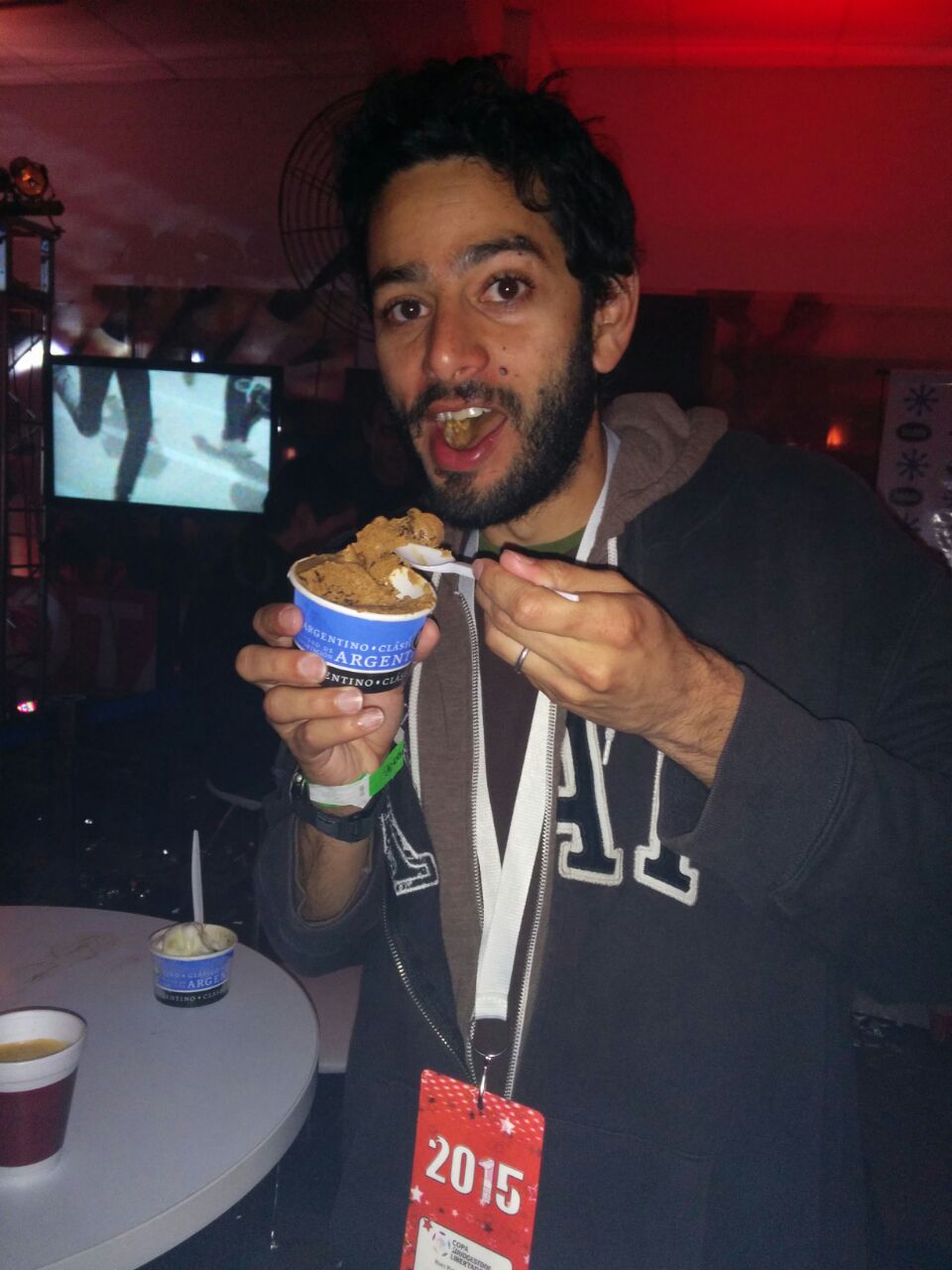
Freddo’s Ice Cream – check it out, seriously
Upon entering the actual crowd, the atmosphere was electric. I’ve been to a number of Redskins games in my time, but I can say this was genuinely something beyond what we call sports passion in the United States (perhaps it has something to do with the team for which I happen to feel passionately about . . .). Every single person was wearing red and yelling their hearts out – and nothing had even happened yet. There weren’t even any cheerleaders or other crowd pumper uppers – there was just no need for such gimmicks. It was an instant sense of awe that came over me, just by simply walking into the actual stadium grounds. In fact, I’ve basically stopped going to football games back home given the high ticket prices, ubiquitous large screen crystal clear HDTVs, and the hassles of trekking out to FedEx field, but if the atmosphere was anything like this was, I’d be inclined to see the action first hand on a more regular basis.
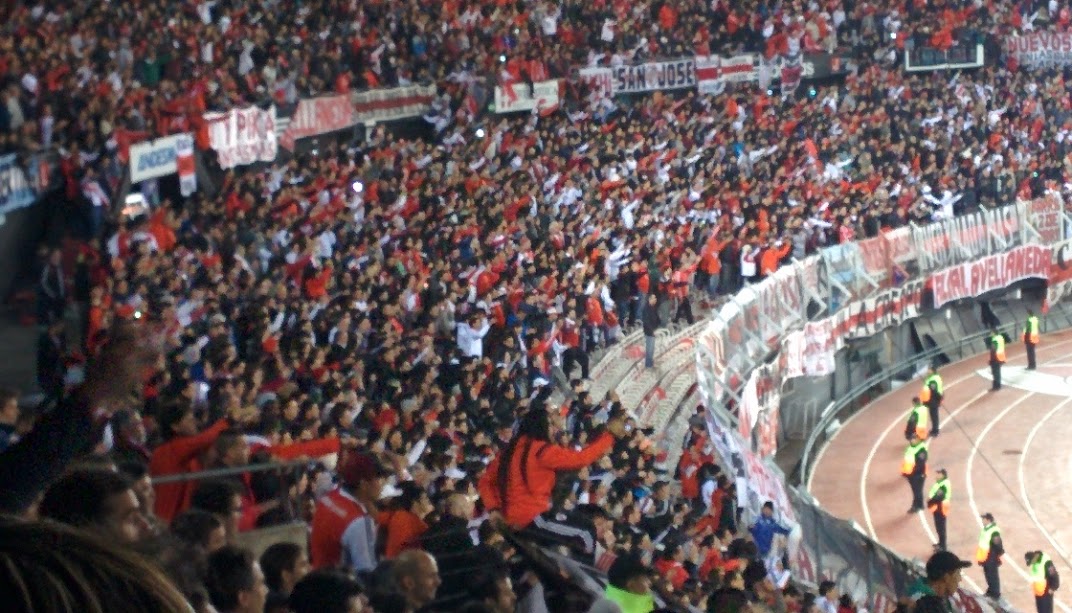
Pure passion
Of course, even though our section was technically the VIP section and thus less raucous than other sections of the stadium, it was still a rowdy crowd. I looked over and saw in the section next to us someone had basically passed out and 4-5 people were carrying him away, motionlessly. I wasn’t sure what happened – some in the crowd said he was too old to handle it, but the intensity of the game claimed it first victim (and the match hadn’t even really begun).
Another interesting aspect is that no one pays attention to seating assignment. In fact, they actively disavow it. Rather, if you are in your general section, it’s a free for all – something we did not realize. Thus getting there late, right before kickoff (is that a soccer term too? should be), did not put us in an advantageous position as somehow basically all the seats were taken. We saw some guys sitting in our seats as we entered and decided best not to broach the subject in hostile territory. Rather we stood in the aisle at the side, perfect since no one was sitting anyways. We were, however, very close to the field with a great view, to make up for it all.
At halftime, more comfortable in our surroundings, Nick decided to get the guys to move, but to no avail. They said someone had told them to sit there at the beginning when they arrived, even though we clearly showed them where their seats were, a few rows back. It was an odd sort of Argentine stand off, with them clearly recognizing they were not in the seats printed on their ticket, but also clearly expressing no inclination to move. We kind of stood there for at least five minutes going around in the circular sort of argument, as they basically assumed we would eventually give up and leave them alone.
They were right. Nick finally took their tickets in exasperation and gave them ours, and we tried to sit in their seats a few rows back. Of course, those seats were empty, but a family sitting nearby told us they were holding them all for people who would return after halftime. Distraught, someone took pity on us and showed us two seats together in the middle of the last row. We happily took those, until about five minutes after halftime when a larger dude than us came out and said those were his. Opting for the pacifist route, we meekly moved to a different aisle, and watched the second half from there.
As for the game, it was a 1-0 result as I predicted (and have always predicted each and every soccer game will be, with about an 80% lifetime success rate). The home team won – though it was apparently on a late and poorly called penalty shot, requiring Nick to suppress an extreme amount of rage. Luckily though, given that the home team won, no one was shanked. The exiting crowd was in a triumphant mood, and Nick had not been out-ed as an enemy, so we were able to make a departure from the stadium unscathed.
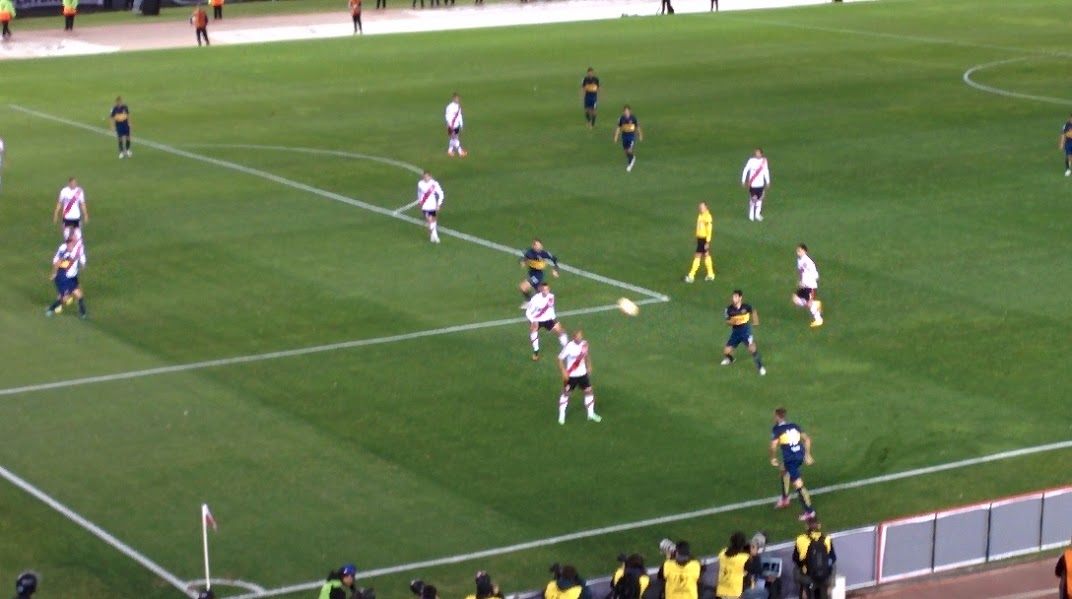
Some actual action!
Nick’s depression over losing the game was heavily outweighed by my jubilation of making it out alive of the perceived enemy’s den, with nary an incident (we did both pretend to be confused foreigners anytime someone commented to us about an assessment of the play, which I suppose was 50% a truth). On the way out we did see a car window smashed to pieces with the insides ransacked – interesting given the 1,700 cops posted around, but I didn’t really like the car anyways, so worked for me.
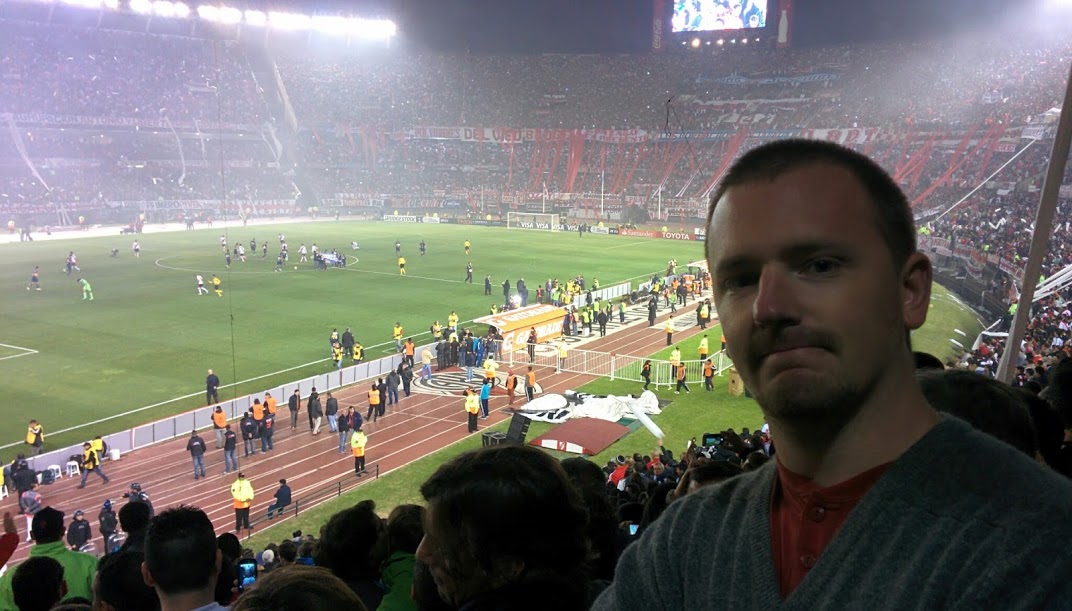
An inwardly repressed Nick
I can’t say that I appreciate the game of soccer anymore after those 90 minutes of (in)action, but I did enjoy the spectacle of fans so passionately pouring their hearts out over what is ultimately a pointless round of exercise between two groups of young adult males. It is something I can relate to (though my sporting events tend to end in utter despair – so I didn’t quite comprehend the ability to leave a stadium ‘happy,’ as these fans did). The obsessive passion behind sports extends worldwide, but I do have to say the futbol fans here have exceeded anything I have witnessed before. Perhaps it’s a necessity, as the less exiting the game, the more exciting the crowd needs to be to make up for it!
Post script: As a testament to just exactly how insane soccer fans can get in Argentina, the second half of the two-series match for the Copa Libertadores between Boca Juniors and River Plate took place the following Thursday, this time at the Boca stadium. When the River players came back onto the field after halftime, some Boca fans sprayed them with some sort of ‘irritant,’ sending four to the hospital and forcing the match to be suspended (at a 0-0 tie). Imagine the chaos if away fans were actually allowed into the stadium as well – I think Argentina would be in the throes of a civil war by now!
Patagonia by the Numbers
As of April 26, 2015 (yes, I know I am slow in disseminating information, but I am typing all of this on my flip phone), we are done hiking! Forever! After 16 days in Patagonia, we are finally leaving the region, prepping for a 28-hour bus journey to the town to Trelew (which is still technically in Argentine Patagonia, but considered distinct for the purposes of this post – yes, I have the power to redraw ill-defined subnational boundaries through the words of this blog, I bet you didn’t even realize that. Maybe you’ll be nicer to me now. Maybe).
After countless beautiful lookout spots combined with a similar illimitable number of wet and stinky socks, we are officially putting Patagonia in the books.
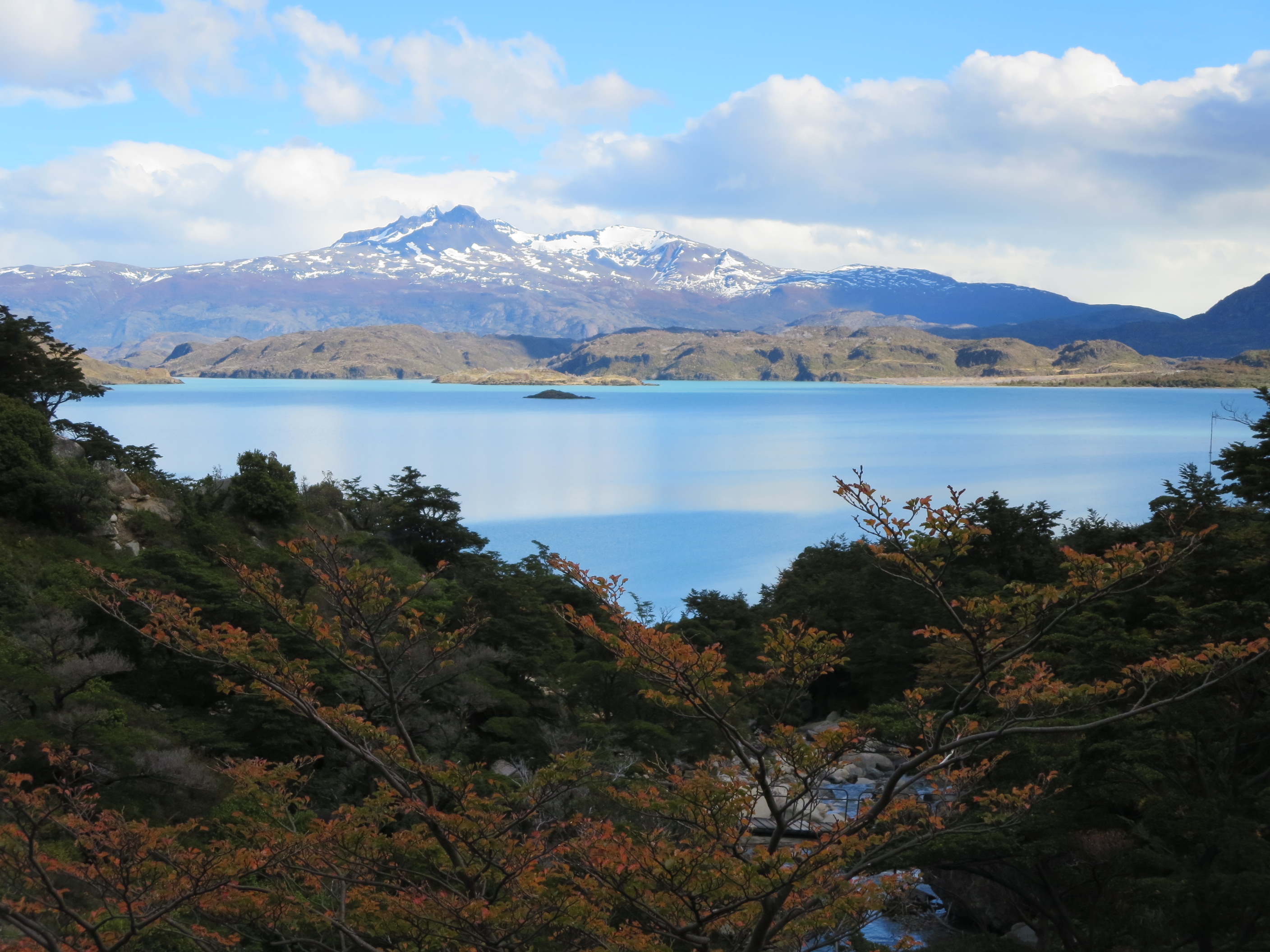
Not too shabby
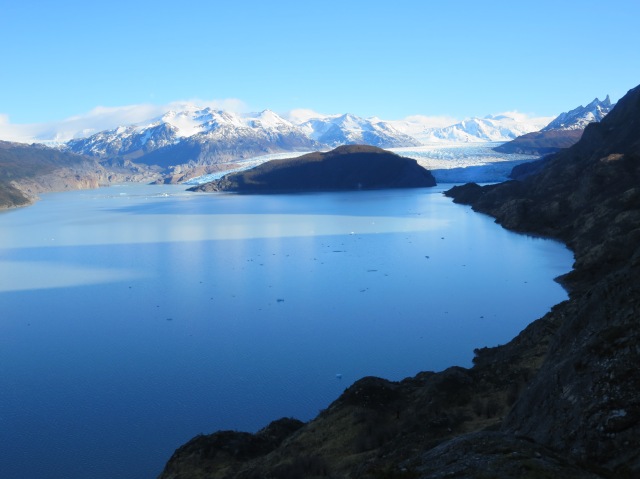
By the numbers:
- Days in the Patagonia region: 16
- Countries involved: 2 (Chile and Argentina)
- Major spots visited: 4 (Puerto Nataltes in Chile, and Ushuaia, El Calafate, and El Chalten in Argentina)
- Minor spots visited: 2 (Punta Arenas [Chile] and Rio Gallegos [Argentina] – mainly transit)
- National Parks
- Parque Torres del Paine (Chile)
- Parque Los Glacieries (Argentina)
- Kilometers traveled by bus: 3,815 (2,370 miles)
- Hours spent on a bus: 67 (2.79 days)
- Total days actually hiking: 8
- 5 day-long hikes (7 hours or longer)
- 3 half-day hikes (approx. 3-4 hours)
- Kilometers hiked: 128 (80 miles)
- Number of kilometers covered when Christine first voiced a desire to give up: 0.75
- Number of glaciers sighted: 3
- Number of glaciers walked on: 1
- Number of rainy days: 2 (not bad for 16 days in Patagonia!)
- Number of hikes for which the cheapest ‘waterproof’ shoes I could find at Sports Authority remained waterproof: 5
- Pounds lost: 11
- Peanut butter & Nutella sandwiches consumed: 33
- Guancos befriended: 4.7
- Guancos that reciprocated friendship: -2
- Money spent: Hey that’s personal (but less than 3 bit coins)
- Sasquatches sighted: 2
- Sasquatches caught: 0 (including on camera)
- Amount of times we will recommend Patagonia to the masses in the future: Infinite
- Amount of times we will recommend Patagonia without waterproof shoes and on only two pairs of socks to the masses in the future: 0
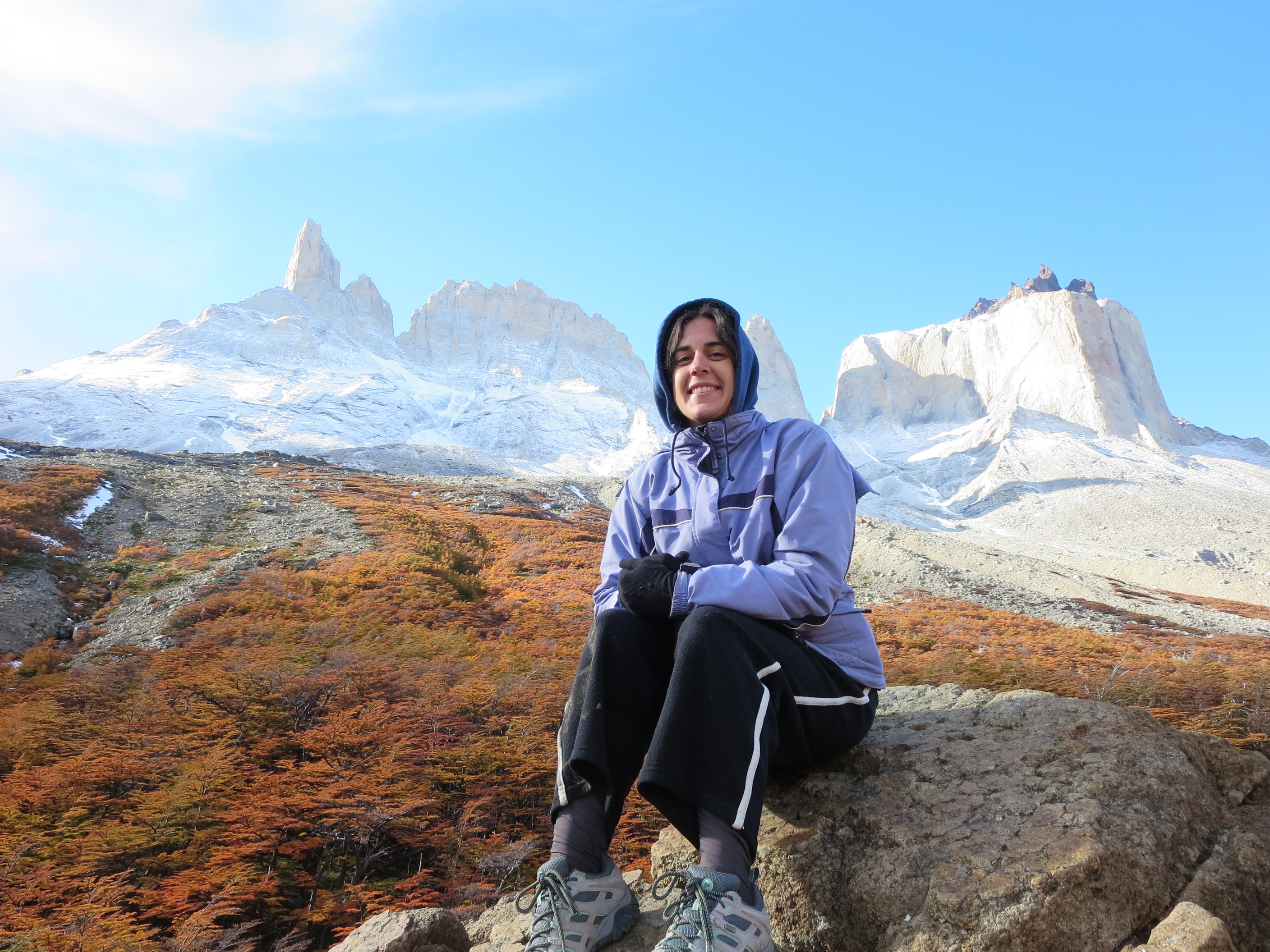

BIG Ice
A guest post by one Christine Ribeiro
While we were hiking the “W” in Chile, we met a number of people who had come from Argentina, where we were heading next. In talking to them, it came up that there was one tourist company (Hielo y Adventura) that actually had permits to take you out hiking on the top of Perito Moreno, the most famous glacier in Argentina and one of the largest/most accessible in the world! One couple did it and highly recommended it, while another said it was the one regret of their trip not to do it as they heard such good reviews. It was not in our initial plan and was quite a bit more than we had planned to spend, but ultimately we decided to go for it. Highly recommended and how many opportunities do you have to walk on top of a glacier in life? Probably only 4, so take advantage!
Being the planner I am, I tried to email and reserve a few days ahead, but was told the reservations had to be done at least 10 days in advance or in person. We arrived in El Calafate, the town closest to the glacier, early afternoon. After exploring hostels for the best deal in town, we went straight to the ticket office. We were in luck! They had a few spots open for the next day. After multiple trips back and forth, exchanging money on the black market (official exchange rate is about 8.6 pesos/dollar but you can get up to 13/dollar unofficially), and showing passports, we had our tickets in hand!
The next morning, we were up outside our hostel at 6:58 AM, as the bus was supposed to pick us up at 7AM. The stars were still out shining as sunrise is not until around 8:30AM down here. The bus picked us up and I had us strategically sit on the left side of the bus, per Lonely Planet’s recommendation, and we were off. About half way through the 1.5hr drive to the national park, it started to drizzle. The forecast had said afternoon rain, but it seemed to be getting an early start. As we are driving through the park to get to the glacier viewing point, the first activity of the day, the driver is talking about all the things that we should be seeing our of the left side of the bus, but actually cannot due to the fog and rain. As we get out of the bus, we see a rainbow next to glacier, a hopeful sign that the sun is somewhere around the rain would soon be behind us.
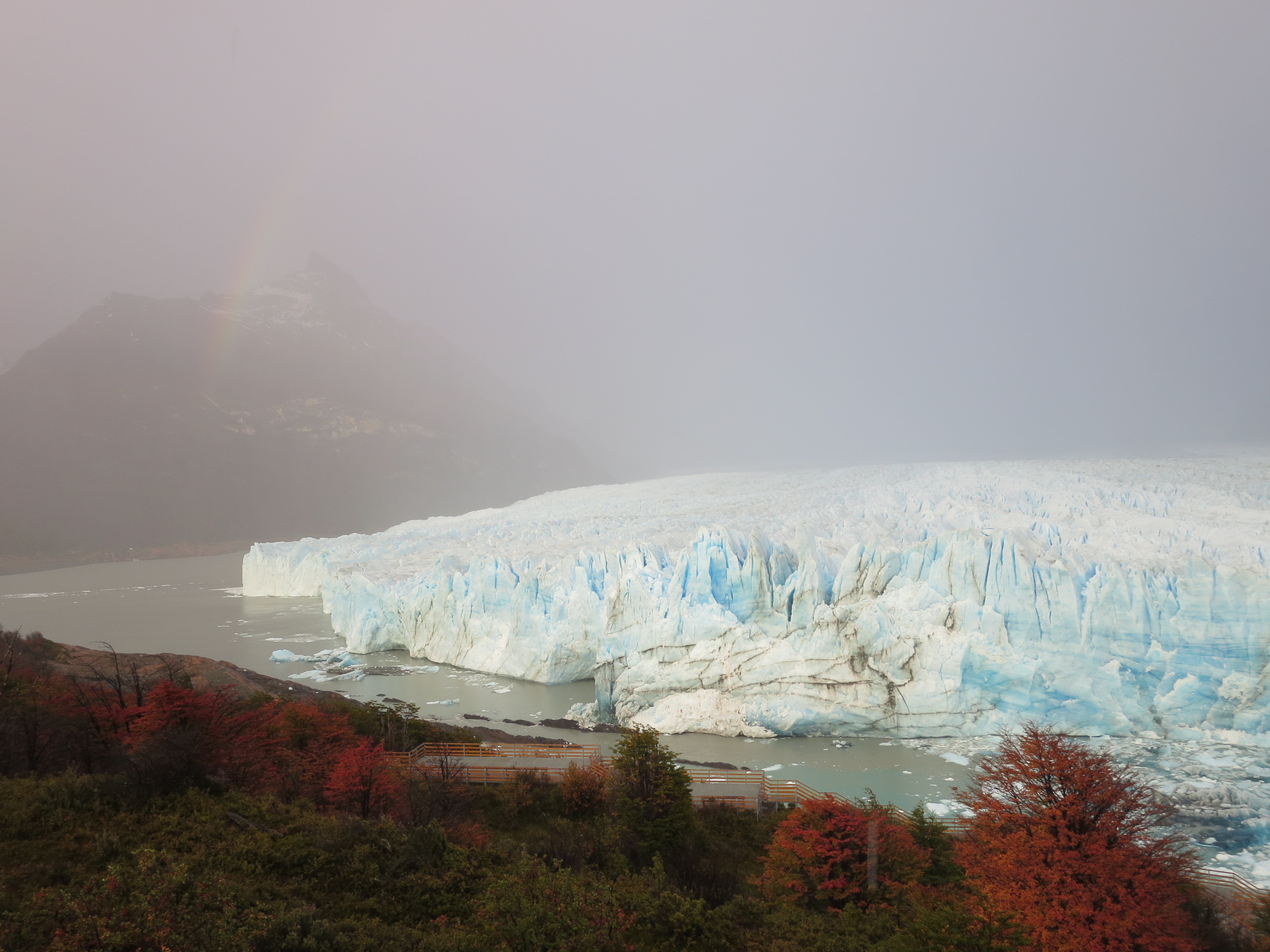
Rainbow of Hope
We had an hour to walk around a network of viewing pathways to see the north and south side of the glacier. The glacier is incredible, close to 11 stories high of pure ice walls, and that is just out of the water, it is close to 30 stories if you count what is underwater as well. It is up to 11km wide and 30km deep. Big enough for the entire city of Buenos Aires to fit on top of it! We look at the glacier from various angles, watching ice fall off the walls into the waters, creating mini icebergs. All the while, the rain is getting harder.
After an hour viewing, we head back to the bus, which drives us over to the pier, where we board a boat to take us next to glacier. What would have been a beautiful boat ride, even for someone who gets seasick looking at boats, was difficult to enjoy as all of the windows were fogged up and it was pouring rain outside. No worries, it can’t rain all day right? And we are going to be walking on this thing soon enough, so we will see it up close. We get off the boat pretty much next to the glacier. I already feel that this trip is going to be worth it as being so close, you really get a sense of the magnitude and beautiful of this hunk of ice.
We have to walk about 1 hour along the side of the glacier before we get the point where we can do our ice trekking. The first 15 minutes are along this nice almost boardwalk like path that ends at a point where the mini-trekking people went out, a shorter version of BIG ice. At this point, our guide says, if anyone would prefer to do mini-trekking due to the weather, let me know now because once we go, there is no turning back. If you are wet and miserable, you will have to continue. This is the part where we should have realized what was in store, but no one budged. We had signed up for BIG ice and we wanted to do it! Come hell or high water.

There is a bridge up there, I swear
We continued on with our hike. While the rain was a constant, my feet were surprisingly dry with my wool socks and waterproof hiking boats. I stepped carefully as we trudged through some muddy areas, now clearly off the manicured path. All the ended when we hit the waterfall. This waterfall was next to the path and there was a little wooden bridge, about 7feet long, to get over the river streaming from the falls. Perhaps on a normal day this bridge works great, but this was not a normal day. Due to the rain, it was running faster than normal and the wind gusts blow the waterfall directly onto the bridge with a gust probably every 5 seconds. Each one of us, as we crossed, was drenched in a shower of waterfall. Goodbye dry socks.
Just when I started to feel down about my socks, the guide stops us and tells us that the rain is coming down so fast, that there is a strong risk of landslides, so we will have to talk 15 feet apart. That way if a boulder falls down, it will likely only kill one of us and not the whole group. Yes that is a direct quote from our guide. I am now wondering what we have gotten ourselves into. We all get across with no issues, but you can see the side of the mountain changing around you, new rivers appearing as the rain accumulates. We finally get to the tent were we get fitted for crampons, but the other group got there first and are all inside, taking their sweet time, so they don’t have to be in the rain. We had to stand out in the rain and wait. Once we are all fitted up, we head to the ice.
Everyone is soaked and, being so close to the glacier, freezing as well. The guide that straps on my crampons has to stop because of the pain in her fingers as they have gone so numb. Once we get on the ice, however, it is like entering another planet. Sand dune like icescapes of various blue tones, deep crevices of water that are so pure blue you look down and can’t tell where they end. We walk around for about 2 hours, visiting various crevices and holes, each more beautiful than the next. At one point, the guides hold on to you as you look over the edge of a waterfall within the glacier. Unfortunately, due to the pouring rain, we don’t want to take our camera out too much for fear of ruining it, so can’t share too many pictures. Trust me, it was amazing.

The BIG ice, a different planet
After two hours of our supposed three hour hike, our guide tells us we have to leave quickly, the rain is coming in too fast and there is a lagoon forming on the side that is not safe for us. Remember that hell or high water, well here it comes. As we walk back on the ice, we see the side of the mountain next to us pouring down. You can tell the guides are worried, they keep telling us to speed up because we need to get out of there. We finally get off the ice and to the point where we move over to mountain. The water has risen, so you just have to step your whole foot into this freezing river to get across. Once across, the guide had us go one at a time to get past the landslides. When my turn came, I was about to go when the guide told me to wait. I stop and look up confused, he points to a spot above me where the rocks albeit small, are just tumbling down the path I am about to head on. I make it across to the other guide who says, “It’s a big adventure, no?” What did we sign up for?
It is not over. Once we past that point, we turn the bend and there is our good friend the waterfall. The water has become even more violent and has flooded the path around the bridge. Multiple guides are lined up along the path to help people across. I get to one spot, where you are standing on a rock in the middle of the rapids, and there is a guide about six feet away with his hand out. He is telling you to walk into these rapids, but is too far away at this point for you to grab. I just jumped to where I had seen other jump and there was a rock that 2 hours ago was above water, but now was just below. The guide grabs my hand and pulls me over to the bridge, where we all once again get a waterfall shower.
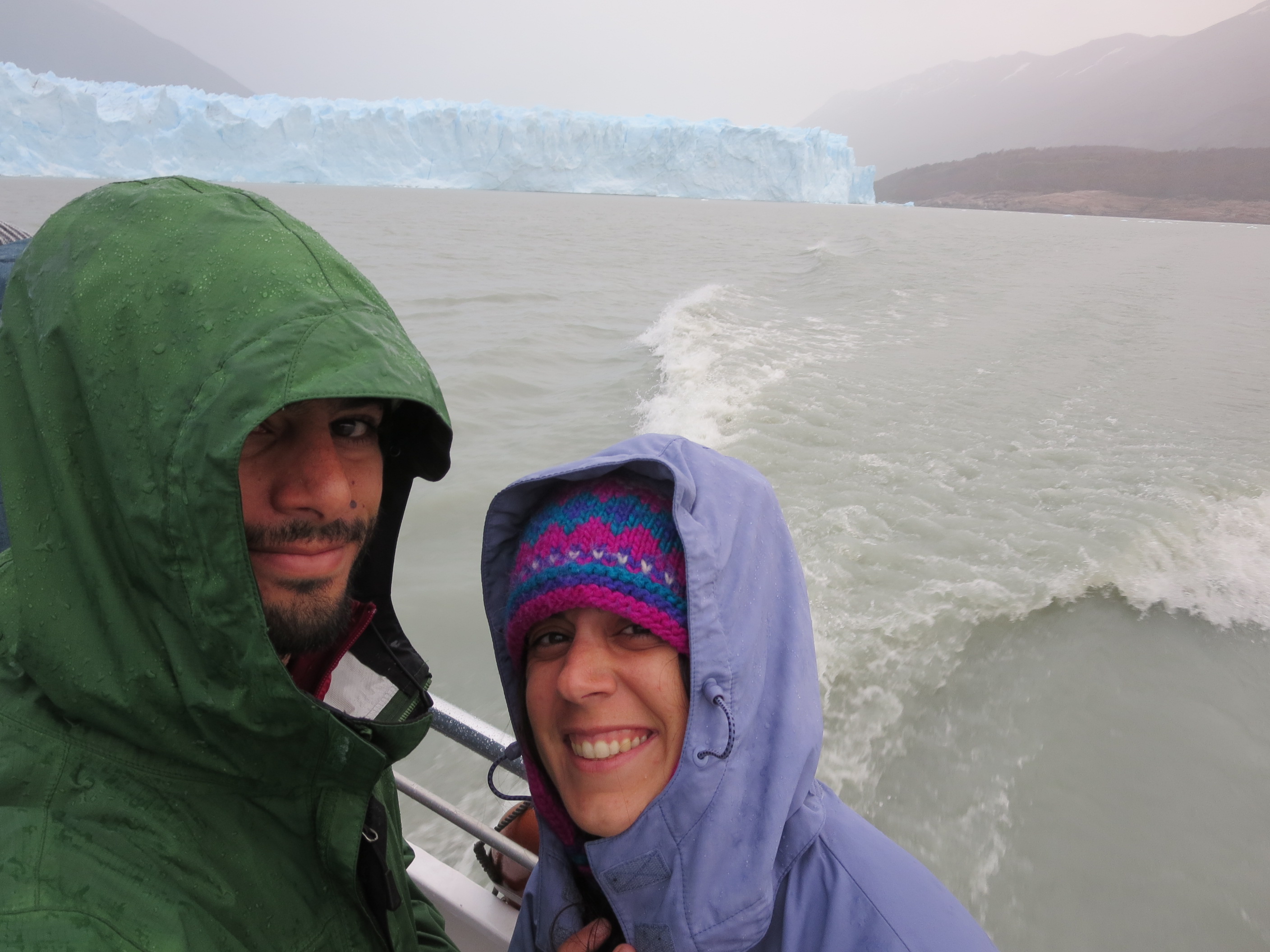
Us on the boat!
At this point, I just want to get back, I beeline back. When I finally get to the boardwalk path, I can breath. I am going to make it out ok. What were theses people thinking??? I know they told me they never cancel, but this is ridiculous. They have a fire and coffee waiting that the lodge. I head straight to the fire and try to warm my hands with the rest of the group.
The boat arrives about 10 minutes later and they hand out glasses of whiskey. I don’t usually drink whiskey, but today it goes down easy. We cross the lake, get on the bus, all wet and cold, and head back into town.
Certainly not what I had bargained for when I signed up for BIG ice, but it was an adventure. And, despite all of this, would I recommend it? Hands down. Walking on a glacier was amazing and worth it, just check the weather report before you buy your ticket!
Mud Walking in Fire Land
You can’t win them all, especially at the end of the world.
Ushuaia, the southern most city in the world is a pleasant enough place to walk around in itself and marvel at the spectacular setting right on the water surrounded by mountains on three sides, while realizing you are truly at the end of the earth.
At the same time, there is an abundance of wildlife in the area, including penguins and beavers. By the time we arrived in mid-April, many a penguins were heading north to warmer climates for the incoming winter (giving me brief pause as to why we had gone in the opposition direction . . . ) so they were out. That left us just mano y mano with the beavers, nature’s weirdly shaped and furry engineers
Beavers are apparently nocturnal animals, working hard to build their dams at night. They hang out at a spot a little out of town, which also doubles as a hike to a lake in the mountains. Seemed like a nice enough way to spend the afternoon, trying to time our return from the four-hour hike with sunset to catch a glimpse of the beavers in action.
Part of the appeal was that these particular beavers have been prolific in building their dams, and by default destroying the local habitat, as they have no natural predators down in Tierra del Fuego. Whatever the actual environmental implications of such a situation, none of that has stopped it from becoming a fashionable Ushuaia tourist attraction.
We were told it’d be a little bit wet out there, but that was “part of the fun.” After just walking over creeks and streams in Chilean Patagonia with our proudly recently-bought water proof hiking shoes, we were prepared for the possibility for a ‘little mud.’

20 kilometers of hiking in this??
A little bit of mud was a little bit of a understatement. Much of the area was covered in peat bog, making it quite squishy to walk on, kind of like the marshmallow land I used to always dream of. That was the fun part – the other part of the hike was a complete mudfest, the likes of which I had not seen since partaking in South Korea’s annual mud fest (an odd event held in Boryeong every summer). The problem was that a good amount of the mud hid amongst the squishy peat bog, making it difficult to be truly confident on where you were walking – to the point where a two-foot mud hole could be anywhere.

Squishy peat bog
And they were! I was the first us of to become a victim, slipping early on to the point where I nearly lost my shoe in the muddy abyss, with the remaining area between my sock and sole subsequently filled with mud. BUT Christine took the (mud) cake, stepping in a sink hole up to her knee at one point.

C doused in mud!

Cleaning off the mud
At any rate, we made it up to the lake amidst the mountains, which under any other circumstances would’ve been sublime. Unfortunately we were there days removed from the Chilean Patagonia Torres del Paine National Park, and everything in life is relative. Thus a pretty view, but not one we had been lacking in recent days (perhaps we had become a bit spoiled by Patagonia, happens to the best of us).

A pretty scene for sure – we are spoiled
To top it off, we got back to the area where beavers apparently hang out and work, with much evidence of their presence. It was another 20 minutes through the woods back to our pick up point, but unfortunately we had forgotten our headlamp, so couldn’t wait too much after sunset for the fuzzy, wet creatures.
Plus it was freezing cold – it was the end of the world after all. We waited for about 30 minutes, as long as we could until it was getting quite dark, with no signs of any beavers in sight. Perhaps it was national beaver holiday we were unaware of, perhaps they hate trudging to work in mud as much as we do (and took a ‘mud day’, as we should have).

Evidence – beavers were here!

More evidence!
So we froze, doused our in mud as part of an emerging fashion trend that no none-homeless individuals seem to be following us on, and unwittingly did another hike after promising to take it easy for a while – the best part being that we had just paid and arm and leg to get all our laundry done (literally, good thing I always pack some extra limbs when traveling). All that for some dam-builders who were too lazy to even show up. The beavers of Tierra del Fuego may not have any natural predators in the area, but they sure have two unnatural ones now!
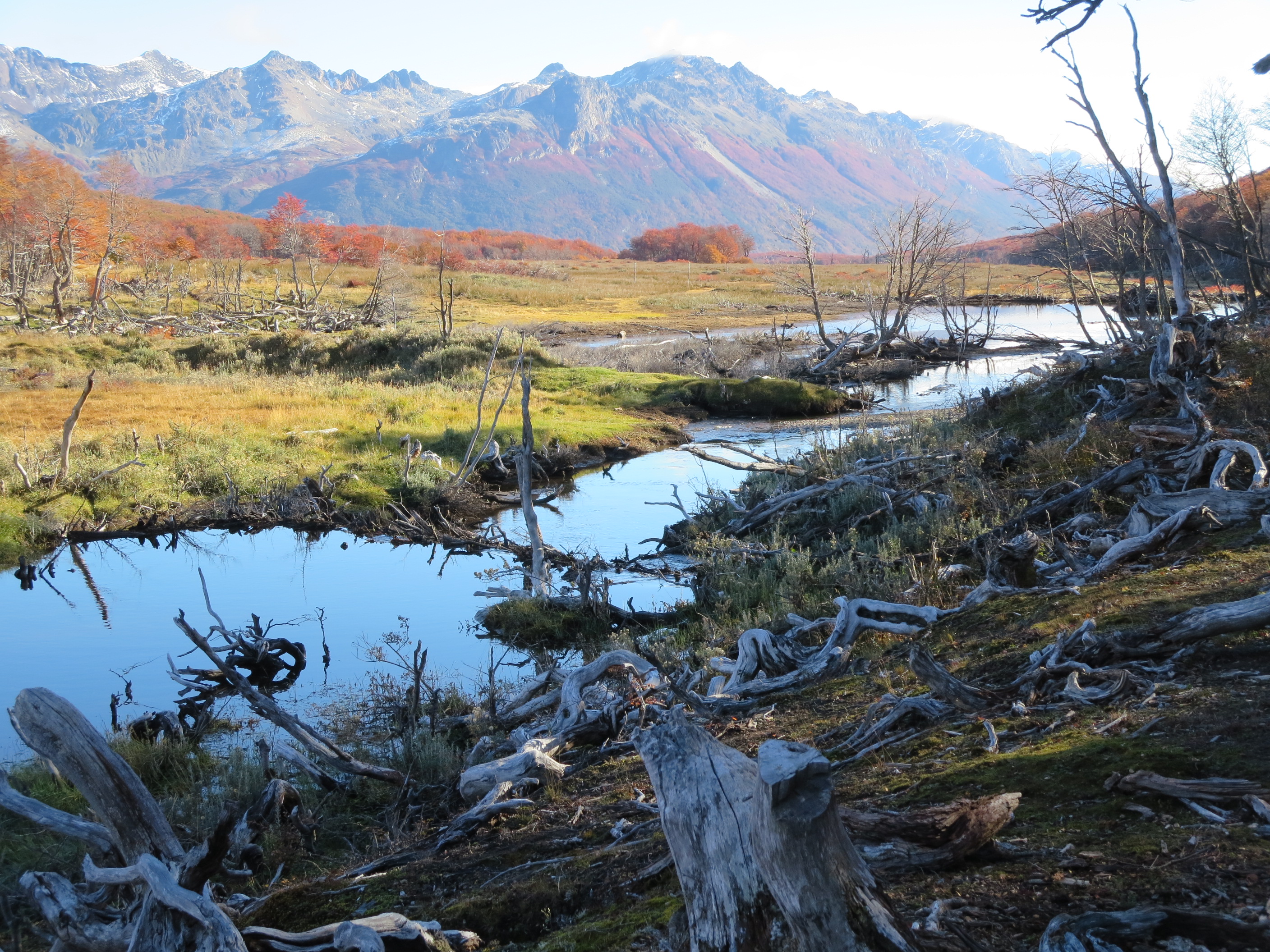
Beaver homeland – we will be back . . .
 Why did you click here?