State-run Ice Cream

If there is one institution that serves as a microcosm for all that is Cuba, it is none other than the Coppelia, or state-run ice cream parlors. If reading the words “state-run” and “ice cream” back-to-back in the same sentence seems odd, well that’s because it is. Of all things for a government to be involved in, I would’ve suspected ice cream production to be one of the last, but then I would’ve speculated very, very wrongly.

One of Fidel Castro’s pet projects apparently revolved around the idea of “ice cream for the people,” thus giving birth to the Cuban government’s equivalent of a Baskin Robbins (albeit initially with 26 flavors, presumably a reference to an important revolutionary event that occurred on July 26th). At any rate, the heavily subsided frozen dairy products fall in line with other forms of incredibly cheap entertainment – such as baseball games, the theater, and an overwhelming promotion of the arts. Keeping the costs of such diversions affordable and thus available to everyone, is likely both a key equalizing benefit of living in a socialist system, and a strategy for the long-term preservation of power. In short, it is an indelible part of what makes Cuba, Cuba.

Screen Shot 2016-02-28 at 3.24.35 PM

What is ice cream indeed?

Screen Shot 2016-02-28 at 3.24.45 PM

Coppelia in action

Government intervention is obvious from the moment you set foot in one of these institutions. For starters, the price of ice cream is astronomically cheap, beyond reasonable human comprehension (I do think some owls could pick this up though). The first time I ordered two scoops, and when I asked for my bill the surly waitress simply grunted “dos pesos.” Assuming there was no way she could be talking in moneda as that would amount to 8¢, I assumed she meant two CUC, the equivalent of $2 (it never got any less confusing that the two currencies in Cuba were often referred to simply as ‘pesos). A dollar per scoop seemed a bit much, but made much more sense than four cents per scoop. So I handed her the exact amount, rather than a larger bill which would have resulted in a 35-minute wait for my change (did I mention this was a state-run place?), and promptly left. It was not until days later at another coppelia that I realized the prices were indeed that cheap, and I had given a personal all-time record 2,400% tip!

Screen Shot 2016-02-28 at 3.24.17 PM

The recipients of a record-breaking, but very confusing tip

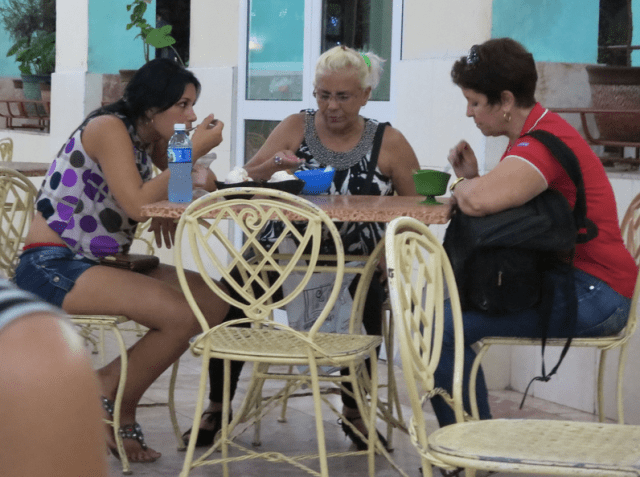
Other indicators typical of state-run places were also readily apparent – for example, I noticed an odd phenomenon where everyone else always had piles upon piles of ice cream at their tables, making my two scoops look rather meager in comparison. A standard order seemed to be more within the five (ensalada) to seven (gran piedra) scoop range, with most customers insisting on two orders each – up to 14 scoops of ice cream per person! Looking at the menu, I realized the largest single order possible was a seven scoop wonder, and assumed the fact that everyone was doubling down was due to some top-down imposed limit to which I was unaware. Regardless, the obscene amounts of personal ice cream consumption fit in nicely with the live-in-the-moment approach to personal consumption on the island, to “get as much as you can, while you can.”

Screen Shot 2016-02-28 at 3.26.10 PM

Only one lady doubling down in this party – the rest do not represent Cuba well

Screen Shot 2016-02-28 at 3.25.01 PM

Remember that its not in CUC, so seven scoops for less than 30 cents!

At the same time, the first coppelia I wandered into was a massive structure, with space for about fifty tables. Of course, only maybe four or five occupied at the time, making the room look eerily empty. The low patronage was not reflected in employee hiring practices, as I counted at least seven people in the back via the see-through glass doors, in addition to four officially uniformed wait staff. That meant each table could have had its own personnel waitress, along with two kitchen members attentive to their order. Given that there was nothing that complex on offer, with the majority of orders consisting of scooping ice cream into a bowl and perhaps delicately adding a wafer, the amount of personnel seemed just so slightly excessive (and likely was given that at least two or three employers stood there the entire time during my visit, literally not doing anything). Except it really wasn’t, because despite the proliferation of waitresses, I still have to work to get anyone’s attention. It took over twenty minutes after sitting down until someone took my order, while two of the waitresses spent that entire time chatting to another lady who can entered the coppelia to sell pastries to accompany your ice cream.

In contrast, hard at work at this coppelia

In addition, the choice of flavors had long been whittled down from 26, evidence of local shortages. No coppelia that I visited offered more than four, with many having only two on hand after selling out the rest. And while the first coppelia I patronized in Cienfuegos was rather empty, the lines around the block on a Saturday evening at the one Santa Clara revealed that perhaps they do fill up at times, and thus engender the continued persistence of Cuba’s line culture. Furthermore, despite this insatiable demand for ice cream, just about every (not-so) convenience store I went into had a large, and utterly empty Nestle ice cream freezer, which looked like it had not been operational for some time.

Screen Shot 2016-02-28 at 3.28.33 PM

The status of (private) ice cream in Cuba

In short, the coppelias symbolize everything that is great and irksome (from my engrained capitalist perspective) of Cuba. The coppelias themselves promote the local dairy industry and provide (excessive) employment, while the cheap price allows (over) indulgence by the masses. Conversely, the coppelias are not insulated from aspects of Cuban life that largely derive from a state-controlled economy such as long lines, limited selection, inefficient service, and externally imposed purchasing limits. At the end of the day, however, if you can acquire 14 scoops of ice cream for less than 56¢, perhaps that is a win for all involved!

Screen Shot 2016-02-28 at 3.26.03 PM

Even this guy is semi-impressed!

Appearances and realities

A guest post by one Christine Ribeiro

When you first arrive in Cuba, with your grand illusions of what communism is, you are confronted with a different reality. Walking around Havana, life seems, well, pretty normal. Granted, it is not US standard of living, but most countries in the world are not, and after a year of traveling through South and Central America, it fit right in with the rest of them. And things kept coming up that just didn’t fit with my image of communism.

Cuba – currently suffering from an invasion of both minions and the Pope!

For example, the main drag of old town Havana, lined with souvenir shops. There is a wide variety of cheesy magnets and keychains to choose from. Che’s face is on just about everything you can imagine, from t-shirts to flags to purses. People are hustling you to come in and look or luring you into cafes with fresh mojitos. You look around and think, this is communism? Hustling to sell plastic crap made in China on every corner? Did you know you can even find coca-cola and m&ms on the island? I thought I came here to see what life was like without all that.

Screen Shot 2016-02-06 at 11.14.33 AM

Lucky couple scored a flat screen tv

What about the Fabrica de Arte Cubano (FAC), a state-owned art center/bar/club. Imagine what a state-owned club would look like, and it was the complete opposite. This place puts every bar in DC to shame. Lines to get in, this huge former electric plant has been transformed into a labyrinth of art galleries, music venues and bars, all under one roof. Each room has its own music and vibe, and while distinct they all just ooze coolness. Open Thursday-Saturday, there are events happening in different rooms at different hours throughout the night. The night we were there, Cubans and foreigners alike sip their mojitos while watching a fashion show of the latest in gothic fashion show by a local designer. Is this the Cuba you were expecting?

IMG_9116

The smartly renovated FAC building

IMG_9118

your typical Saturday night Havana gothic fashion show

Being there over Christmas, everyone was out with their new presents, namely the kids. While sitting on the Malecon, the iconic Havana road along the water, a young Cuban couple with a three year old girl came to try out the girl’s new present. Dressed to the nines, this little girl got in her mini electric car and drove up and down. I thought Cuba didn’t have access to new cars, how does this three year old get one? Was it at the mall that we stumbled upon, full of people shopping at stores like Adidas? Again, not the Cuba I imagined.

Screen Shot 2016-02-06 at 11.08.18 AM

A Havana mall at Christmas time

Screen Shot 2016-02-06 at 11.08.24 AM

But as you spend time, observe, ask questions, and get out of Havana, you begin to see just how life really is different here, shaped by their system and their past.

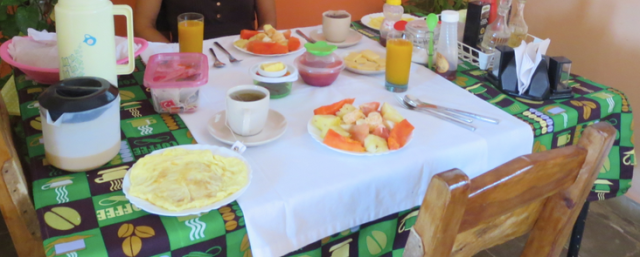
Take the breakfast spread that we had at our house in Vinales (fruit, eggs, cheese, ham, bread, honey, butter, two kinds of guava jelly, fresh fruit juice, tea and coffee) was quite a spread by any standards. Looking at this, one would think there was no lack of foodstuffs, however, upon learning more, we understood that was not the case. It had taken hours of searching and waiting in line over multiple days for our host to acquire this assortment of goodies. In fact, the next day we tried to eat at a local egg sandwich place for breakfast and they were completely out of eggs already at 9am. That is all they made and they were out. It was not until the next day that we saw everyone in town walking around holding 5 dozen eggs each (probably the maximum they were allowed to buy) that we realized it wasn’t just this shop, but the whole town had been out of eggs. The meals that magically appeared in the morning were not as simple as they first seemed.

Screen Shot 2016-02-06 at 11.10.19 AM

Or take the hoarder we stayed with in Santiago de Cuba. This older woman lived alone in a very large house right in the historic center of town. The room we stayed in was very clean and nice. Like all the others we had stayed in, it was complete with AC, fans, hot water, soap, towels, etc. For some reason, outside the room, every free space was filled with very old pieces of plywood and the sort. It was as if this hoarder could not get enough wood. While strange at first, we later learned about the ‘special period’, following the fall of the Soviet Union, when Cuba had to go through some extremely lean years. There was no fuel to cook with and barely any food to survive. People took to burning their wooden furniture to cook on. Looking at it this way, it is no surprise that this woman, who supported her family through these times, prefers to keep old rotting wood around.

It is not until a few days in that you realize, while there may be more shops and commerce than you imagined, there is absolutely no advertising. All billboards are political in nature, flouting the glory of the revolution. There are no TV or radio ads, something we have to pay extra for in the US. At the baseball game, there are no sponsors, no ads flashing on the big screen, no distractions from the game. This aspect was actually quite refreshing.

So, if you want to see the remaining vestiges of communism, you need to work a little harder. Get out of Havana and the beach resort area. Head as far to the east as you can, off the tourist circuit. Talk to as many people as you can, they are open and love to share their experiences. Keep your eyes open and enjoy!

Screen Shot 2016-02-06 at 11.12.57 AM

Y’all come back now, ya hear?


14 Things I Learned About Cuba

1. Reforms are making a major impact (more so than changes in US relations)

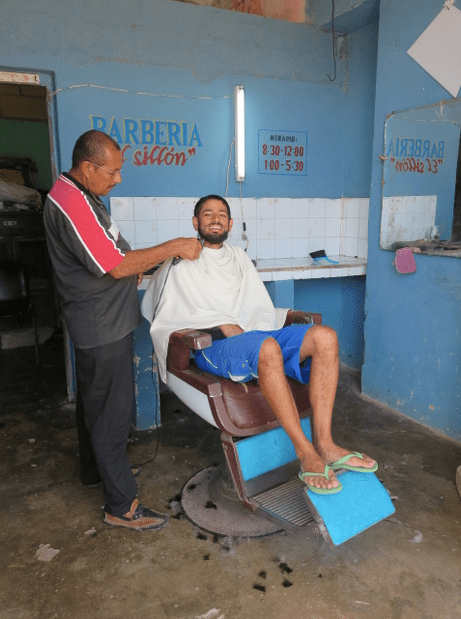
Reforms have made a marked impact on the life of daily Cubanos, with presumable shifts in the island’s socialist core. The legitimization of 170+ private businesses in 2011 means that hair dressers, driving instructors, bathroom attendants, and even magicians are now present in higher rates than before. A restaurant owner in Havana, who pursed his dream to open up one of the first private restaurants in the city in the mid-1990s, explained how at the beginning the government viewed him suspiciously, like he was doing something wrong, and sent a steady stream of inspectors to fine him for the slightest of violations. In contrast nearly twenty years later, the environment has vastly improved to the point where the government now views his occupation positively, even allowing access to small amounts of credit for such entrepreneurs for the first time last year. As he said, “some people just want to work a job, while others are entrepreneurs – now those that fall into the latter category are able to pursue their path.” This official experiment with capitalism has been a major driver of change on the island, and may even outstrip what an end to the US embargo would mean.

Screen Shot 2016-01-31 at 9.08.30 PM

The ability to sell (or exchange) your home – a recent option for Cubans
Screen Shot 2016-01-31 at 9.13.50 PM

This guy can’t have more than four years of (official) experience . . . I usually don’t settle for barbers with less than nine (made an exception).

2. Private enterprise is more efficient, but that doesn’t mean it’s always the answer (although I am now also more of an ardent capitalist). In addition, while capitalism is slowly taking root, its not quite there . .

The efficiency of private enterprise over state-run entities is difficult to argue against, and I found myself more ardently in favor of capitalism (within reason) after the visit. A short narrative explains my stance. Going to the Viazul (state-run tourist bus) station a day before to get tickets to a town three hours away, I was greeted by a long line (very typical) extending well outside the building. Taking my place at the end, I was resigned to wasting over an hour here, only for the ticket vendor to likely inform me the bus was sold out. At about the same time, a private taxi owner (likely allowed as part of reforms in the past few years) came by soliciting passengers for his vehicle, offering rides to the same destination. Charging $15 rather than the $12 for the state-run bus, the extra funds would result in getting picked up from my house, getting dropped off at my house in the next town, and a faster ride with just three other passengers (and even more space, given that the double backseat rows of the car fit five). In addition, he was present and immediately available, with a line of other private taxi owners outside, to meet the excess demand in a manner that the state could not. Thus I could either wait in line for an hour or longer and take a less convenient ride, or spend slightly more for a higher level of service and not have to wait at all. The choice was clear, and the contrast behind the efficiency of the private enterprise and the failings of the state could not have been any clearer.

Not to say “our” system is infinitely better. The pursuit of endless profits at all costs drives innovation and progress, but has downsides in creating an elite corporate class that wields an inordinate level of influence (sounds like I could be Bernie’s campaign manager). In contrast, despite the experimentation with capitalism in Cuba, it clearly hasn’t taken full root. At a baseball game, the crowd around me began discussing in earnest the situation of a Cuban player who left to go play (in Venezuela?), drawing a much healthier salary. Rather than appreciate or understand such a move, the crowd reaction was more one of universal derision, making fun of him for becoming, for lack of a better term, a ‘fancy pants.’ Later that night at a small restaurant frequented by tourists, all the tables were full, although two (including yours truly) were in the process of paying the bill. When another couple came in to get seated, the restaurant employee explained there was no space. Seemingly content with the level of business for the evening, she simply turned the potential clients away, rather than ask them to wait for a few minutes. Aghast at potential loss of profits, the other table of tourists from a capitalist country that were paying the bill, told the newcomers to wait and they’ll give them their table in a few minutes. Seeing other clients approaching the packed restaurant I tried to do the same, asking for the bill so I could get out of her way and not impede additional profit making that evening. Of little concern to her, I got the bill over twenty minutes later after asking two more times, during which many a potential new customers were forced to look elsewhere. Capitalism clearly exists in forms, just the lesson on maximize profits at all costs perhaps hasn’t taken root.

Screen Shot 2016-01-31 at 9.01.29 PM

A mall in Havana at X-mas – the future of Cuba?

3. Rules are supreme, but people find ways around them

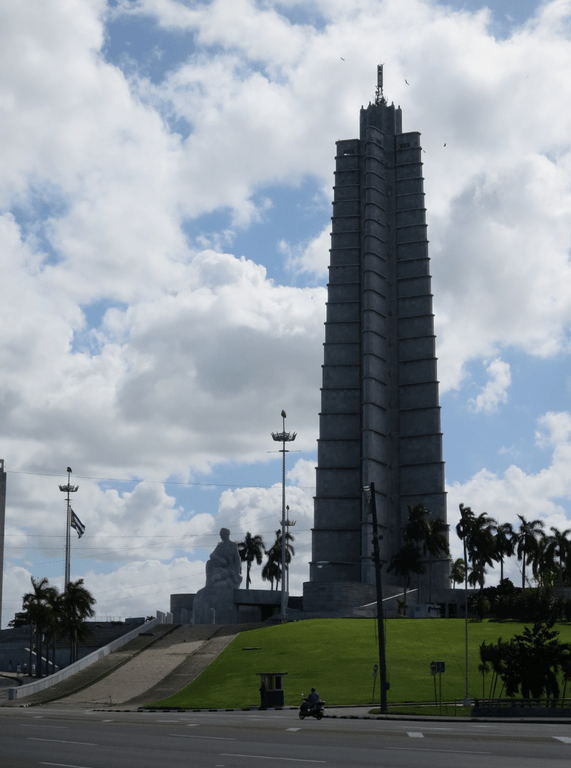
Cuba can extremely be bureaucratic at times, with rules heavily enforced down to seemingly minor levels. I realized this early on, when a whistle happy guard nearly blew out my eardrum merely for looking at the José Martí monument while it was ‘closed.’ At other times, it seems odd when you go into a ice cream shop there is a limit on the number of items you can purchase. A maximum of four scoops – how decidedly un-American!
Screen Shot 2016-01-31 at 9.00.21 PM

I got in trouble just for looking at this?

Fear of being caught outside the bounds of the rules is high – this was played out when a set of casa owners demanded I register with them instantly upon arrival, lest a random inspector happened to drop in during the time I went to the bathroom. At the same time, other casa owners never me registered at all, indicating that the perils of being caught may at times be outweighed by the benefits of off-the-books transactions.

At any rate, decades of arcane regulation have engendered resilient island. To illustrate – after waiting over thirty minutes in line for churros at a weekly Saturday night festival (did I mention things move slowly?), my quest was nearly derailed when the vendor stated that everyone who wished to purchase churros must have a child with them (I had only been waiting in line for 30 minutes instead of nine months by the time he made the announcement, so I couldn’t have done much about it anyways). Apparently despite the many adults present, the sale of churros was only for children. There was a big loophole, however, in that each child was allowed to purchase up to five sets of churros, thus allowing them to share with any adults that may have been funding diabetes-inducing nighttime snack.

Essentially defeated by a system I didn’t understand, I was saved at the last minute by the intervention of a young girl, who instantly grabbed my money and explained I was in line with her. Before I could even realize what was happening, the unimpressed vendor relented, and allowed us to buy the maximum between us. Bureaucratic rules up against the creative resilience of a twelve-year old with nearly a decade’s worth of experience navigating the system. The latter won out, as I suspect it does the majority of the time.

4. Poverty and class differences exist

When you think about Cuba, you think of an idyllic socialist paradise where all are equal and no one looks down on anyone else, no? While the contrast between the haves and have-nots may not be as dramatic as in many of its neighbors, poverty and class differences are surprisingly ingrained in society, despite decades of policies to eliminate both. In fact, they may even be getting worse.

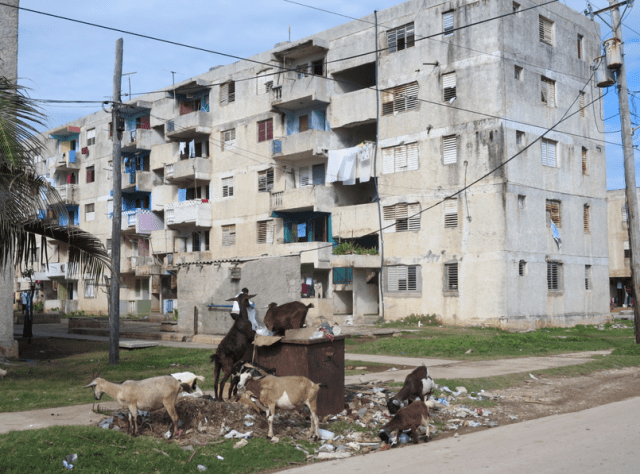
A simple 10-minute walk between rundown, old dwellings of downtown Cienfuegos, and the recently renovated mansions and private clubs of its coastal Punta Gorda neighborhood reveals unexpected stark differences. Or perhaps the presence of beggars on the streets of Havana will stand out. The sheer desperation of an elderly campensino so eager for financial renumeration in Vinales that he tracked me down on his horse three times during an obvious twenty minute hike to me show the way (for a dollar), also came as a bit of a shock.
Screen Shot 2016-01-31 at 9.13.28 PM

Upper class goats slumming it at a public housing complex

Screen Shot 2016-01-31 at 9.07.35 PM

The private club where they (the goats) usually hang

Such differences have become further entrenched through the use of dual currencies – the Cuban Convertible Pesos (CUC) and the Cuban Pesos (or moneda nacional). CUCs are traded evenly with the dollar and primarily utilized by tourists, thus flowing into the pockets of those working in the tourist industry. Moneda nacional on the other hand (which is traded at a rate of 24 to one CUC), is the ‘local’ currency used to buy heavily subsidized items. Middle class residents who are able to rent out their rooms to travelers gain access to a steady stream of CUCs, further distancing themselves from those who deal solely in moneda.

A former doctor in Holguin exemplified this dynamic – she left the medical profession and her 50 CUC equivalent salary each month, to run a bed & breakfast where she can earn 25 CUC per evening, equaling her previous salary is just two nights. An internal sort of brain drain when the earnings of a B&B host vastly outstrip that of a respected doctor, who at the same time is now able to distance herself from her former state-paid colleagues. The result is a new class of enriched, tourism-dependent entrepreneurs, who enjoy steady access to cold hard beautiful CUC cash.

5. Old cars are nice, but also a reminder that environmental regulations make a big difference

The iconic American cars dating back from 1950s cruising down Havana’s Malecon contribute to the nostalgic vision of Cuba as a place stunted in time, reminiscent of an earlier, simpler era. The cars themselves seem to define Cuba in a nutshell – a visible reminder of the US embargo, while the fact that they still run is a testament to local ingenuity.

While the cars do make for a beautiful backdrop, most of the restored ones have been done so solely for the purposes of generating a tourist buck (CUC) or two. In fact, one cab driver mentioned how the older cars were in the process of becoming more expensive than importing newer ones from non-US manufacturers, given the insatiable tourist demand for a trip down memory lane.

Nonetheless, the less publicized side of this anachronism is the high rates of diesel fumes inhaled. Walking down a street in Havana, described as a ‘diesel sauna’ by a fellow traveler, is a pleasant experience, until one of those cars rolls by emitting who knows how many CO2 emissions in the form of plumes of black smoke, right in your face. I developed a sore throat just two days in, despite the constant 90-degree weather, to which I directly attributed to the higher than normal amounts of pollution consumption. It’s time like these that make me appreciate the emission regulations aimed at protecting my delicate, delicate lungs – despite many a previous complaints any time car inspection time rolled around.

Screen Shot 2016-01-31 at 9.01.56 PM

A please scene, but detrimental to your long-term health

Screen Shot 2016-01-31 at 9.10.34 PM


Screen Shot 2016-01-31 at 9.10.51 PM

But really, who can resist these iconic photos (and I’m not even a car guy)

6. Life can be extremely cheap

Prices can be extremely, extremely, super extremely cheap, especially when paying in moneda. Covered seats at a baseball game run for 4 cents, while cheap seats in the sun are half that. Ice cream at state-run institutions costs you seven scoops for 20 cents (a limit of two orders). Ubiquitous personal pizzas are as little as 20 cents. A 4-hour ride on local ‘camion’ transport came to a dollar. When items are this subsidized, perhaps $25 a month isn’t so bad after all (entertainment – the theater, baseball games, ice cream, etc. – in particular is very cheap, perhaps a means to keep the masses occupied).

Screen Shot 2016-01-31 at 9.17.21 PM

Paid double for this view!

7. The lack of supplies is real (albeit exaggerated)

One aspect of life often assumed about living in a communist economy, is the dearth of supplies considered to be basic elsewhere. This was apparent right from the start, when checking in for the flight at the airport, you could easily spot who was Cuban and who was not based on their luggage. All sorts of modern appliances, from air conditions to flat screen TVs, from tires to diapers, were brought onboard.

Screen Shot 2016-01-31 at 9.32.24 PM

That tire will find a good home

The emphasis on bringing such goods underlines how common shortages can be – not just of appliances but also food items. For example, a casa owner in Vinales went to a neighboring town, the capital of the region, on a daylong search for a simple bathroom mirror, only to return empty-handed. A renowned restaurant was out of milk, beef, and pasta the night I dined there, rendering 80% of its menu obsolete – and no one else batted an eye. Another lady explained that she assumes her Argentine boyfriend, who regularly visits the island, could never live in Cuba because how could he “go from a place that has everything, to here?”

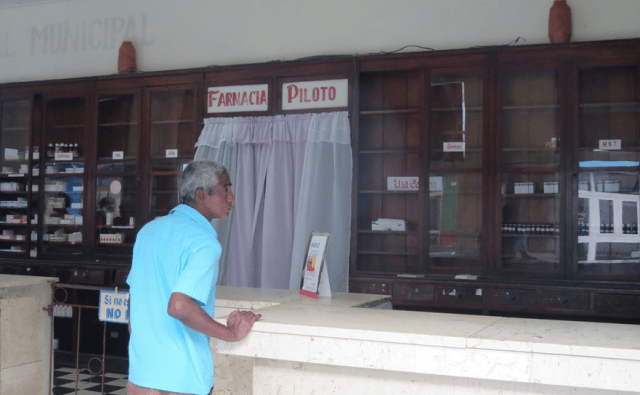
The issue is compound by the ‘space ratio’ in stores – that is unnecessarily large structures filled with a small amount of goods. If the mid-size store downsized instead to that of a local tienda, its shelves would be appropriately filled with enough goods to fill its space. But when you have unnecessarily large stores with vast aisles and little to put in them, the visual effect is magnified (perhaps a consequence of cheap state-regulated commercial space rent?).
Screen Shot 2016-01-31 at 9.15.58 PM

A semi-stocked pharmacy

Adaptation to this aspect has engendered a mentality of ‘buy as much of everything that you can, when you can.’ During ‘egg day’ in one small town, everyone walked away from with at least five dozen – not a single person bought just two or three for that evening’s meal. The state attempts to counter this mentality with general person limits on how much of a certain item can be bought at a time, but as seen above, people know how to get around the rules.

The shortages mean that creative resilience of the population to obtain goods manifests itself in the most unexpected of ways – when calling down to the reception of a hotel in Havana for a completely unrelated issue, the polite, young receptionist closed the conversation with “are you selling anything? The Mexicans that stay here sell things, and we will buy them!” Emphasis on the lack of specificity must be noted here, as literally “anything” would be up for discussion. I was half-tempted to turn my entire duffel bag into a quick economic experiment to gauge the demand for goods such as tattered socks, used razor blades, and dried out pens, but spared everyone the indignity of rustling through my dirty underwear in the hopes of finding a new dinosaur shirt.

However, it doesn’t seem as bad as it could be – you can find toilet paper at least. The prior insistence by many to bring my own soap also proved to be unnecessary (mainly because I rarely showered, personal choice).

Screen Shot 2016-01-31 at 9.15.47 PM

What’s available today (sugar, salt, rum, beer, and rice – the essentials)


8. An entire ‘line culture’ exists

Another interesting facet of life in a communist system often portrayed in the media, is presence of long lines for everything. Cuba is no exception to this, and lines of people waiting to conduct simple tasks such as buying bread, changing money, or even buying ice cream are commonplace. So common in fact, that it has resulted in the development of an entire culture of line waiting.

Generally guards limit the number of people actually allowed inside the institutions, meaning that a crowd of people manifests on the streets outside. While it may appear chaotic, it is anything but. Everyone is aware their place in line, as any newcomers must ask “el ultimo?” (i.e. the last?) and get behind that person. Often, however, people don’t physically wait in that spot, but maintain a general reference to their place in the order, while line neighbors will save the spots of those who smartly multitask by leaving to do something else as the line slowly progresses. Despite the fact that people are standing everywhere, order is highly respected, and you will not be cut. While this courteous line culture is nice, on the other hand it indicates just how used to waiting in line people are, and how much of one’s daily errands are consumed by such a process. Rarely did I come across someone who was surprised that, when he went to his local tienda to buy milk, he would have to wait what I consider an excessive amount to complete the transaction.

Screen Shot 2016-01-31 at 9.14.27 PM

No one cutting in this line for Internet

9. Advertising comes in the form of revolutionary propaganda

Flipping through newspapers or watching TV, I was struck by the limited advertising. The 3.5 minute commercial breaks I take for granted were refreshingly absent. Revolutionary marketing, however, is big business. Photos and quotes from Fidel, Che, Raul, and even the occasional Huge Chavez are everywhere, such as Fidel’s anti-capitalist tirade inside one of Havana’s more X-mas decorated malls. A different sort of take on advertising, but I suppose the end goal is similar – having you buy into a system rather than buy a product.

Screen Shot 2016-01-31 at 10.23.56 PM

10. People are educated & highly aware of the world outside their island home

I encountered a highly educated populace, albeit it the embedded effects of the revolutionary advertising are impossible to wash away completely (for example, monuments to the five ‘antiterrorist’ Cuban spies exchanged in 2014 for USAID contractor Alan Gross, as part of normalizing relations with the United States, were everywhere, and everyone could name all five members). Nonetheless, most Cubans cited the power the US Congress holds over the restoration of full relations, an awareness of local politics in another country that I couldn’t assume could be true on the reverse. As one casa owner put it, “everyone here knows about politics – and if you don’t, you’re a pile of yams.” I couldn’t have agreed more, and serves as an indication of the high human capital potential often discussed when it comes to the future of Cuba.

11. Despite the lack of universal technology (i.e. the Internet), things work – just a bit differently

Cuba works, just differently at times. Internet has been gaining traction recently, as the government has established public Wi-Fi spots at the main parks in most cities. You buy a pre-paid Internet card, log-in with your device, and are good to surf the surprisingly decent connections. Private connections remain a rarity due to high costs (though this is changing), as do cyber cafes, but you can always know where a Wi-Fi spot is by the huddled masses of (largely) young folk holding phones, tablets, and laptops (another recent development, given that ownership of such items was banned until 2008).

Screen Shot 2016-01-31 at 9.08.02 PM

Internet is truly a communal affair in Cuba!

The lack of technology is apparent in other areas, as many businesses rely on old school models. Reservations for buses, taxis, and even flights came down solely to having a name on the right piece of paper. After my flight out (on the state-run airline) was randomly canceled a week prior unbeknownst to me, and I had to wait a day for the next one, the manager simply wrote my name down and told me to come back tomorrow. I protested, assuming there had to be some electronic input to this process, or that some sort of confirmation receipt should be issued to me, especially as this particular manager wouldn’t be there the next morning. As he shooed me away, I was certain the next day would be a repeat situation and I would half to make a new life in the Havana airport a la The Terminal– style. But the paper made its way to the right people, and the next morning I checked in without a hitch on a different flight than the ticket I presented. Perhaps that’s how things used to work before the Internet took over – I don’t really remember, and soon no one else outside of Cuba will either.

12. The simplest of things we take for granted are not always easy

Even just trying to accomplish basic tasks can be frustrating. I went into a store that looked like it was decently stocked to buy orange juice (an attempted ailment against the pollution induced-sore throats mentioned above), and was pleasantly surprised to see that they had an imported brand from Spain (thus avoiding the angry and bitter Cuban citrus – also just finding orange juice in itself was a bit of an accomplishment, based on previous lengthy and unsuccessful searches). I grabbed one and went to the counter, where a lady with an open cash register was separating the moneda from the CUC in the drawer. A guy is standing next to her, typing numbers into a small machine while yelling other numbers out to seemingly no one in particular. This goes on for at least five minutes, as she never looks up. Finally she tells me I have to go to the other side of the store, something that apparently couldn’t have been said before. I go to the other side where the previous number yelling guy is now ringing up people. I wait in line for a few minutes, then he quizzically looks at me and remarks “oh, you brought your stuff over here?” Confused by that statement, I look back to the other side of the store, and the counting lady who rejected me, is now ringing up customers! No matter, I decide I really don’t want to ever do this again, so I quickly grab a second juice to not avoiding having to return (picking up that Cuban mentality quickly). While coming back to the line, I noticed another lady has locked the store entrance, even though its only 4:45 and they advertise a closing time of 5pm. Some customers try to push the door open, but she holds them back and explains that they need to close early to clean up some water. I look over to where she is pointing and see a huge puddle of expanding dirty water – apparently one of their meat freezers broke and was rapidly flooding the entire store. The whole process was emblematic of how the simplest things sometimes are not so – all I wanted to do was buy orange juice, and now nearly thirty minutes later I was in danger of having raw-meat water seep into my shoes. Times like these I appreciate the uneventful, albeit impersonal, routine 7-11 interactions that ensure I can acquire a product without losing half a day (or a sock).

13. There is a strong sense of community

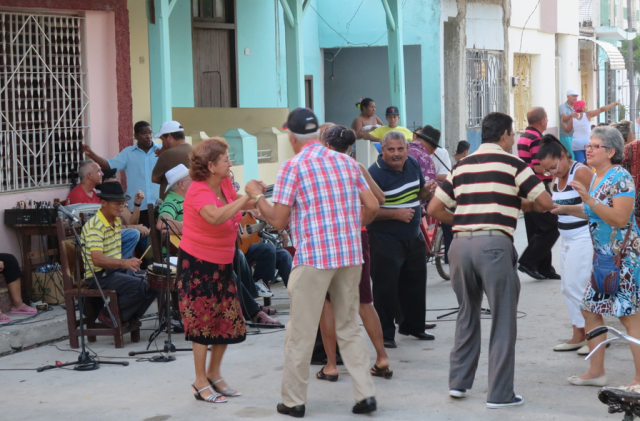
One of the ‘soft’ effects of communism many sympathizers argue is the heightened sense of community, especially with the supposed universal state-imposed equality. In Cuba, this can be apparent through the lack of major crime, especially compared to some of its neighbors in the Caribbean and Latin America (one of the most violent and murderous areas of the world). But I witnessed this at other, more minor yet just as revealing, levels. Taxis asking for directions in neighborhoods they were unfamiliar never failed to get an adequate response – often the first person stopped would be just as unaware, but they would in turn start tracking down others on the street until a firm answer emerged. No one walked away before the taxi request was fulfilled – rather there was a sense that despite not knowing one another and just meeting, we were all in this together.
Screen Shot 2016-01-31 at 9.17.51 PM

Impromtu community street dance party


14. And finally – all the idiosyncrasies are what make Cuba unique, and hopefully merit even further future exploration!
Screen Shot 2016-01-31 at 8.59.38 PM

Until next time . . .
So You Want to Visit Cuba Before it “Changes?” – Well, You’re Too Late!

Cuba has been on a lot of minds lately, in large part due to the advancing winds of change emanating from its traditionally hostile northern neighbor. Speculation about the potential impact of normalized relations with the hitherto isolated island has spurred a surge in tourist visits, as many attempt to get on the ground prior to the lifting of the five and one-half decade old US economic embargo, and avoid a presumed future with sun-stained and wrinkled Floridians on every block, the Big Mac as Cuba’s national dish, and Starbucks coffee coming out of all public faucets (a mindset that yours truly has been as guilty as anyone of harboring). This ‘normalization’ effect has been so significant that during a recent visit at the turn of 2015, tourist industry operators countlessly explained that this was the largest number of visitors they had ever experienced, straining the already limited service capacity. As hordes of vacationeers grasp at a presumed last chance to visit a pristine land immune to the pernicious evils of American capitalist greed and Hollywood culture, it might be a good time to inform all involved (especially those planning urgent trips in the near future), that the biggest lesson gleaned from my visit is that they are already too late.

Screen Shot 2016-01-31 at 9.07.48 PM

El Rapido – an authentic Cuban fastfood chain!

More than six years prior to President Obama’s historic announcement in December 2014 outlining the restoration of relations with Cuba, longtime Cuban leader Fidel Castro ceded authority to his younger brother Raul, citing health concerns. This leadership shuffle at the top of island’s power hierarchy heralded a new era in Cuban history. Reforms initiated by Raul – such as allowing the ownership of electronic devices, reducing restrictions on international travel, and legalizing up 178 different types of private enterprise – have imbued the island with a slight capitalist bent, and upended the idyllic tranquility romanticized by travelers wishing to experience of one of the last remaining vestiges of communism (but not actually ever live through it). The effects of these changes are present throughout the island – major cities have a decent selection of private restaurants, tourists and locals alike cram into public parks to enjoy Wi-Fi access that connects them to the outside world, and middle-class residents open up their homes for tourists to stay in (casas particulares).

Screen Shot 2016-01-31 at 9.59.05 PM

A nicely renovated casa particular (bed & breakfast basically)

That’s not to say that communist-inspired economic policies and signs of government intervention in all aspects of society are non-existent – far from it. Cuba is the place to go if you want to purchase heavily subsidized ice-cream (four cents per scoop), spend hours each day waiting in lines for anything and everything, exchange ubiquitous advertising for billboards championing the revolution, and inhale the passing burst of unregulated fumes from beautifully restored 1957 Chevy Bel Air. The impact is felt by all who live within the system – tobacco farmers noted how they have to sell 90% of their crop to the government, a casa particular owner explained how she gave up her $50 a month government salary as a doctor to make nearly as much each night renting out a room to tourists, while a young professional in Havana pined over traveling to Haiti (downtrodden Haiti of all places!) to purchase the latest goods.

Screen Shot 2016-01-31 at 9.08.20 PM

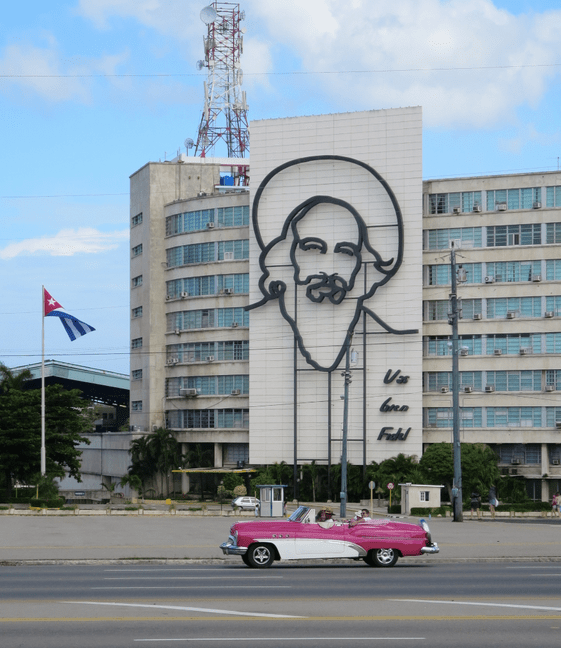
Still running (strong-ish) after nearly 60 years – who says American cars aren’t built to last?

In this sense, elements of Cuba as a living museum for outsiders to marvel at are still readily apparent, but they have been altered significantly in recent years. Economic controls have been loosened and capitalism is beginning to take shape – now (approved) private enterprises jostle with government-run entities, rather than being illegal and/or frowned upon. Nonetheless, it is easy to forget that despite the changes and the Obama administration’s recent overtures, the Communist Party of Cuba remains the ultimate arbiter of power on the island. The pattern of change established has been steady thus far, as the system transforms from one of the last havens of communism on this planet, to one that is just a little bit more measured in outlook. From this perspective, rather than viewing the eventual lifting of the US trade embargo as a culmination point in this process of change, it is just another step (albeit a highly significant one that likely goes beyond mere symbolism) in a longer-term process.

Screen Shot 2016-01-31 at 9.01.07 PM

The blockade – longest genocide in history . . . (?)

Many Cubans feel the same – one (perhaps jaded) tour guide operator remarked on the improving relations and eventual dissolution of the embargo, that “there will be a few more tours and businessmen, but nothing will really change.” Implicit in his comment was the lack of impact on the daily lives of ordinary Cubans. A casa owner in the east of the country was more sanguine, noting that proximity to the US would ensure reduced prices for goods currently imported from further flung locations, but stopped short of predicting that his future battery purchases would be at Costco, and twelve dozen at a time. The common underlying sentiment being that while enhanced US relations will be a boon for the island as a whole, those pulling the levers within Cuba will ultimately determine just how far and at what rate the effects will play out, especially for the masses.

Screen Shot 2016-01-31 at 9.03.57 PM

Broke down cars and bread lines – I don’t think this scene is going anywhere!

In this sense, the coming storm will likely be more a steady trickle of small adaptations that build upon one another, rather than an avalanche of instant Americanism, avoiding the overnight mini-Miami transformation feared by many current and prospective visitors. That in and of itself is probably the most encouraging news for travelers who desperately want to visit the island before it “changes,” but may not be able to in the near future. At the same time, Cuba undoubtedly has already changed, rendering harried plans to see communism in one of its purer forms less relevant. But given that the trajectory will be filled with numerous other fascinating twists and turns, there is still plenty of occasion to visit.

The Cuba of ten years ago resembles the Cuba of today less with each passing minute, but the same will be true of ten years from now as well. So fear not – you may be already too late in one sense, but that’s okay because it’s going to take a while!

Screen Shot 2016-01-31 at 10.21.16 PM

This Cuba is here to stay . . . ?

Cheese Bread (Khachapuri) in Georgia – Part ერთი of ერთი

Georgia (the independent country that is significantly smaller in population and territory than the peach-filled, southern state) is the land of khachapuri, or cheese bread. When those words were uttered to me prior to Christine’s and my trip there to visit her cousin, my heart skipped a beat. Or maybe it was my overjoyed stomach attempting to swallow my heart – either way something told me our eight days traveling around the country were going to be a delicious culinary treat (words I do not employ lightly outside of your local Fuddruckers). Given my predilection for cheese and the fact that bread is fine but even better when utilized as a vehicle to legitimize even more cheese consumption, Georgia and I seemed like a match made in heaven.

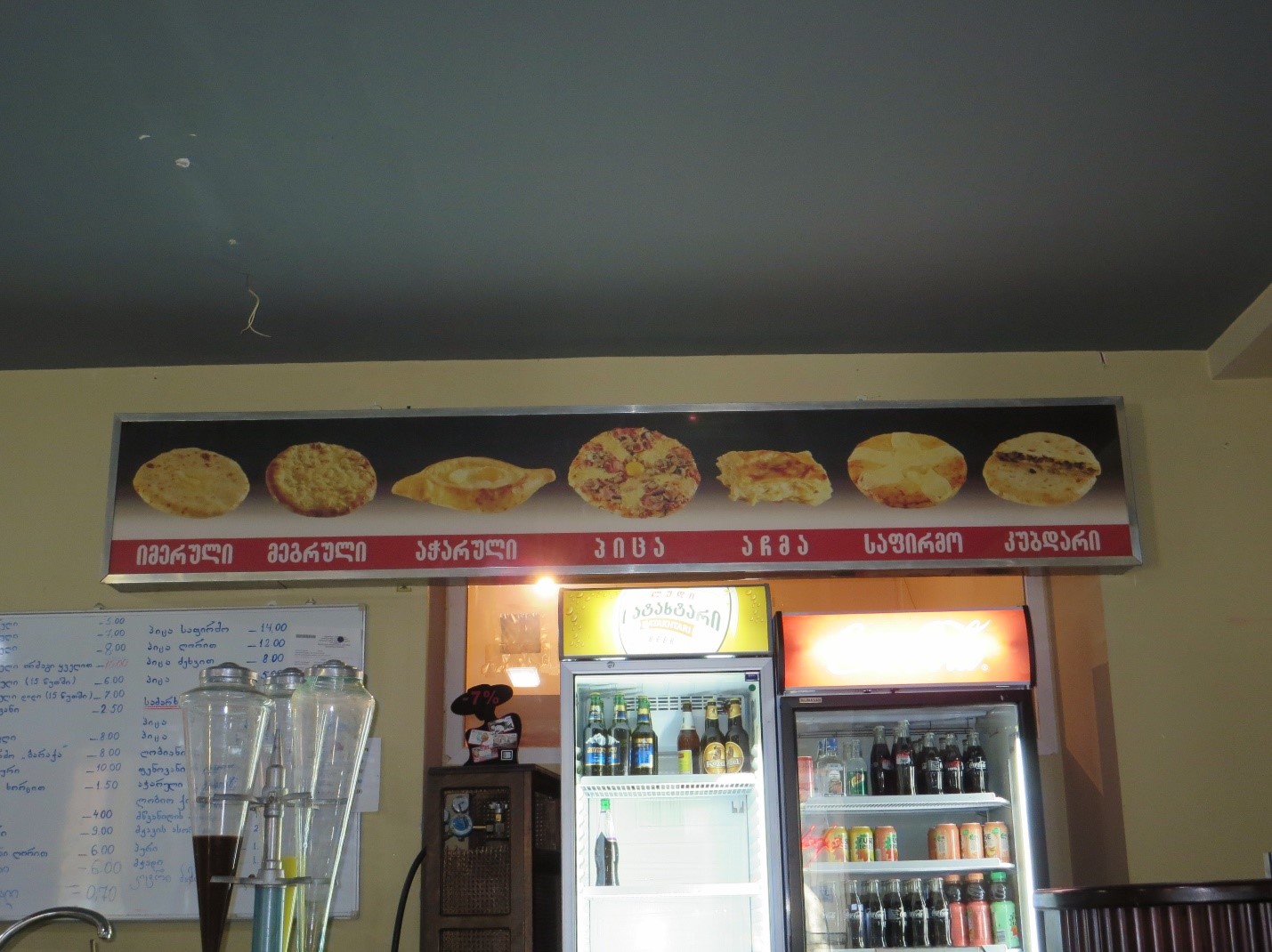
In short, the khachapuris did not disappoint. I quickly made it my goal to try them all – there is a degree of regional variation, and we were going to be traveling around a lot. Our Lonely Planet book named seven different varieties (typically filled with Georgian Imertian or Sulguni cheese), though a few cheese-less ones substitute beans or meat & don’t really apply to the khachapuri purist (or I assume, given my recent status as a self-appointed one). Regardless I scribbled down all their names and made it my mission to see that they all got crossed out (spoiler alert: eventual mission success – thanks in large part to our ever accommodating host).

However, while they were definitely not hard to find (in fact khachapuris are so ingrained in local diets that there is even a national inflation index based solely on the price of these wondrous carbohydrates, a la The Economist’s Big Mac index), what threw us for a loop was we kept discovering new ones! That in and of itself is delightful, but it also meant that trying them all in an eight day span, without overdosing on dairy and having our bodies forever become lactose intolerant as a cruel, cruel response, was going to be difficult. It also makes me unsure of my claim to have tried every Georgian khachapuri – despite repeating that phrase often in past weeks, I am certain it cannot be true (though if you talk to me in the near future, such realities will likely do little to hinder me from continuing to boast it). Other regional variations, or even subtle differences of the same type across different dining establishments, must exist. While we wound up eating 14 in total (or 1.75/day – which for the record is a lot of heavy bread & cheese as these are not small items, but basically pizza-sized pastries), the allure of discovering other potential untouched versions continues to keep me up at night. . .

So many choices

At any rate, on with the khachapuris. We ate them at all sorts of places, ranging from hole-in-the-wall lunchtime establishments, to a typical rest stop on the way to the Caucasus mountains, to an Ossetian restaurant given that the Russians won’t let us go the separatist region to try the original, to an upscale dining center in Tbilisi, among many other locales. A key theme despite type or location is that they were all delicious – in fact I haven’t met a khachapuri I didn’t like to date (as in up until now, not the verb ‘to date,’ although I did feel very strongly about a few of them – luckily Christine did not seem to notice).

The list, in order of appearance into my life:

  1.  Khachapuri on a spit – on a spit I tell you! This is one of the oddest ones, so naturally we wound up trying it first. While it may have a Georgian name, all I know is it’s made on a spit then taken off of the spit, so there is an element of hollow air running through it. Intriguing, but that hole could’ve also been filled with more cheese.
  2. Lazurian – I think this is the right name but we didn’t come across this one that often. However, we should, because it involves three layers of cheese. While others (see below) may just have cheese in the inside, or even just on the inside and on top, this bad boy goes further to add yet another layer of cheese on top. It is simply stunning.
  3. Megruli – a fairly common khachapuri that combines cheese on the inside with more cheese on top. We ate this one at the upscale Tbilisi restaurant Bread House. Despite my natural disinclination for any location with more than three pieces of silverware on the table, they sure do know how to make a tasty cheese bread.
  4. Ploivian – now this one really is a mystery. On our way to Mount Kazbek we stopped at this small town called Pasanauri. There were found a simple rest stop-type restaurant filled with cheery people and good food (also ate many khinkalis, Georgian dumplings, there). On the menu was a khachapuri our dutiful host had never even heard of in her two years in Georgia, and one we never saw again anywhere else (nor had anyone we talked to heard of it). The restaurant proprietor explained that this was a regional khachapuri often found in South Ossetia, the Russian-troop filled isolated breakaway region at the heart of the 2008 war with Moscow, an area that was just on the other side of the mountains found facing westward from the town. While that may explain its scarcity elsewhere, it does not explain its ingenuity. Essentially some Ossentian at some point decided to take your typical heavy cheese and bread dish, and try to add a little bit of health to it, stuffing it with beet greens. While the cutting of the cheese with fresh vegetables was appreciated by some, I was left wondering what it would’ve been like if we had added that extra cheese on top.

    The mysterious and large Plovian khachapuri

    The mysterious and large Plovian khachapuri

  5. South Ossetian – Another Ossentian addition to the list (for a breakaway region, they sure are active in the kitchen)! We had to go to a specific South Ossentian restaurant in Tbilisi’s old city named Alanya to check this one off the list. Another example of Ossentian ingenuity, the inside of the bread is stuffed not just with cheese, but also potatoes – what will they think of next!?
  6. Achma – After making great progress by eating four khachapuris in our first 27 hours in country, we stalled a bit as we took a hiking adventure up north. Upon our return to Tbilisi we revived our khachapuri mission with a reckless abandon, ordering three for lunch one day, starting with Achma. This khachapuri, which I have been informed this is an Abkhazian specialty (another Russian-occupied breakaway region), is akin to lasagna, without any sauce. Incredibly buttery, the cheese is found in between egg noodle-like layers – delicious and went down smooth, but ultimately felt very heavy. This khachapuri was also baked fresh for us, although there was a moment of confusion as I thought my two-word Georgian vocabulary did not accurately convey we wanted just a piece of Achma rather than the whole fresh baked item (about five times the size). Luckily no one ever pays attention to what I say, especially in Georgia.
  7. Phenovani – Part of the legendary three khachapuri lunch that will be the standard for years, this has been referred to as a ‘pocket’ or ‘envelope’ khachapuri as the ends are folded into the middle (still stuffed with cheese of course). The dough we had was flaky, causing Christine to refer to it as a good ‘breakfast khachapuri.’ I personally wouldn’t place such limiting restrictions on this khachapuri, or any khachapuri really, ever.
  8. Kubadari – From the Svaneti region, this khachapuri breaks up the monotony of constant cheese by adding meat to the mix. The one we sampled had small strips of flavored beef (rather than ground beef). A great idea in theory, but the one we tried in practice seemed to be lacking a bit in the meat department, as the strips were spread out few and far between. We probably should’ve supersized it for just a quarter more.

    A three khachapuri lunch day

    A three khachapuri lunch day

  9.  Immeruli – Perhaps the staple khachapuri, this one keeps it simple with just cheese in the middle. Sometimes doing less is doing more.
  10. Lobiani (Rachuli) – Another variation on the classic cheese-bread combination, the Lobiani throws beans into the pot. Georgia has good beans, so why not?
  11. Adajaran no. 1 – Words, or at least my typed words, cannot do this one justice. Shaped in a boat, similar to a Turkish pide, the khachapuri comes out full of cheese and piping hot. But wait, there’s more – much more! On top of the cheese is a raw egg and a slab of butter for good measure. You mix it all together, so the egg cooks and the butter melts, creating an amazing combination. The bread around it is then peeled off and dipped in the middle, until slowly and magically its all gone. Fully cognizant of the fact that I could never live in Georgia as I would eat this on an unsustainable thrice-daily basis, this quickly became my hands down favorite. We tried it first in the western city of Akhaltsike, closer to its origins in Adjara, but our host had her own favorite spot to do it all over again the next day . . .

    The Adjara of my dreams . . .

    The Adjara of my dreams . . .

  12. Adjara no.2 – So good it had to be on here twice (though the fact that I only ate this one twice is an eight span is a minor travesty in itself). Stopping by the town of Mtskheta (say that ten times fast, or even just once), we had this bundle of future heart disease another time at one of our hosts favorite ‘fast food’ spots. A fitting way to end a tour that had to end, for if not I would either die, or perhaps finally become the sumo wrestler I always felt I was destined to be.
  13.  (and 14) Repeats – About four hours following that meal (the typical allotted break time between khachapuris on this trip), we headed to a restaurant called the Black Lion for our final Tbilisi meal, and to meet up with some old favorites. We were told the establishment was a bit of a fusion of Georgian and Western food, replete with interesting options. While we had a Megruli khachapuri for good measure, we also tried an Immeruli one, with a twist. Rather than using traditional Georgian khatchapuri bread, this one focused on regional integration by using the thin Lavash flatbread typically found in Armenia. The lightness of the bread was a nice change of pace from the previous 13 katchapuris, while the cheese was still there. Basically it was a grilled cheese sandwich, and an appropriate culinary finish to our two weeks trip across Armenia & Georgia.

So there you have it, 14 khachapuris in eight days, with 11 varieties. If there are any other existing versions out there that I missed, please feel free to fill me in, as it will give me a convenient excuse to return to Georgia in the near future!

The First Time in Burkina Faso I Almost Died (According to No One Except Me) – Fila

I immediately hit the deck, the deck being a red dirt dusty road. My bag of tomatoes got squished between my chest and the road, while I got a mouthful of dirt. As I had said, there was a 2/11th chance of perishing in Burkina Faso, but I was really hoping it wouldn’t be on my third day in village, the very first time I went out by myself (I had just gotten the place so clean!).

I was still on the ground unsure what to do – those three months of Peace Corps training had not really prepared me for this situation. Should I roll around and do some ‘manvouers’ (whatever those might be)? Should I get up and run zig-zagging in the other direction? Should I throw my tomatoes in his face and charge? Even if I got away now this was not that big a village, surely he would find me later. Would I have to spend the next two years dodging bows & arrows?

While calculating my next move, I began to hear a loud noise. A roar if you will. It was laughter, a ton and ton of laughter. I peaked my head up and saw that the entire town, everyone who had been sitting on either side of the road watching my every move, had continued to watch after I bought the tomatoes and now were laughing hysterically. This is an odd village I thought, how can what is happening be funnier than the Aw ni tile joke?

I was a bit confused so I looked up some more, to see if my tormentor was still there. To my surprise he was laughing as well. It didn’t seem like my life was in immediate danger anymore, so I slowly stood up. The man I thought was going to be the last I ever saw was standing there, dressed in complete rags. He had knotty hair, and in between laughing was trying to sing a song. He wasn’t very good. But when I inspected him further, I realized the bow was indeed still in his possession, but he didn’t have an arrow. And he likely never did.

Still a bit confused, I dusted myself off and tried to salvage what I could out of my tomatoes. A young man approached me, also laughing, but perhaps taking pity on me. “Il faut pas t’inquiéter, il est fou!” – or “Don’t worry, he is a crazy person!” That’s when I fully comprehended the situation. For whatever reason, just like dust and goats, many villages also have a crazy person – a fou (or sometimes a crazy women, a folle). The lack of mental health facilities probably doesn’t help, but they are harmless. Often they amble about, signing songs, telling tales – an almost jester sort of role at times. We had great moments with the one in our training village up north, actually he was quite an entertaining individual (he claimed he had asked the World Bank for 20,000 white people to build an international airport in his village of less than 200, and the four of us in training were the first to arrive – that meant he also considered himself to be our boss in a sort of way, and always carried around the hand-drawn blueprints of the prospective airport design to prove it).

However, they are also crazy. And they do crazy things. And for some reason in this village, someone had decided to give this crazy fou a bow. Luckily, however, they had the foresight not to give him the accompanying arrow. This was all unbeknownst to me, but I was getting a quick education in it now.

So I was alive, but my confidence completely shattered again, and no amount of tomatoes would bring it back. I meekly smiled and tried to say something to the fou. Of course he was laughing too hard and trying to sing when he wasn’t laughing, so it was tough to get anything through. Usually he made people laugh around the village, at least I was able to do the reverse to him. That and the entire village had finally stopped watching . . . no wait, that wasn’t true at all.

It was a bit of an awkward situation, the kind I was desperately trying to avoid, so I resigned myself to failure and walked away off the main road and back to my house tomato-less. There’s no way everyone saw that right, I reckoned to myself. No one would remember that, the fou has probably pulled that trick on plenty of people. This is going to be ok, I bet people in this village hate to laugh.

I spent the rest of that afternoon in my house, not leaving. My counterpart came over that afternoon, to recount the story of ‘The Fou and I,” that he had just heard. Oh well, looks like Day 4 was going to be another cleaning day!

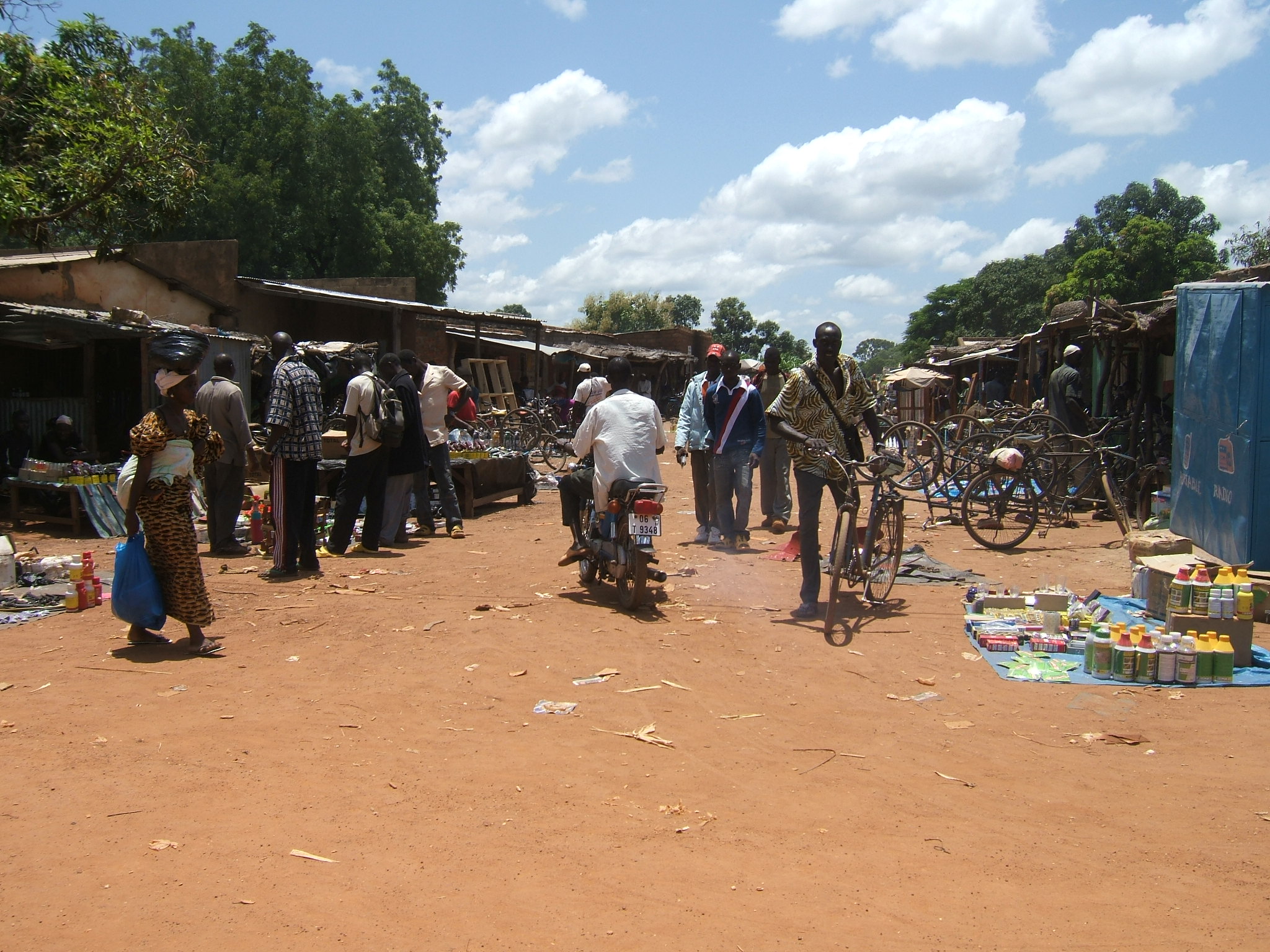
The main drag of my torments

The main drag of my torments

The First Time in Burkina Faso I Almost Died (According to No One Except Me) – Keleng

Before I left to go to Burkina Faso with the Peace Corps, I figured there was a 2/11ths chance I might meet an untimely demise while there. This was based on absolutely no legitimate math or rational information whatsoever, as I had rarely met a fraction I could comprehend, but a number I kept in mind that was just low enough to avoid any justification to back out under concern for such pretexts.

Fast forward to three months later. I had completed our three month training program, and affecté (sent) to my site. I was replacing a married couple in the southwest of the country in a small town known as Sideradougou. However, that couple had left Burkina six months prior, and by the time I arrived in the house I was to be living at, the lack of cleaning over a the past half year in a place where things get very dirty, very quickly really showed. So I spent my first day entirely cleaning up the joint, and then again on the second. It was not exactly glamorous, nor involved saving babies from endemic cholera on an hourly basis as I had imagined, but it had to be done.

However, there was another reason I spent two days cleaning, two more days that I had ever cleaned anything in my entire life combined prior to that. After three months in Burkina, I had become somewhat accustomed to the culture and country. However, during training, which was located on the north side of the country far away from my current posting, I was always surrounded by other volunteers. We split off into small groups of 4-5 where we did language training all day, then came together every 10 days or so as a big group to do more technical training. It was easy to go around and explore with others by your side. Being dropped off in village and realizing you were all alone for the first time in three months was a daunting feeling.

So cleaning in some ways kept me occupied, and delayed the process of exploring my village on my own. However, I couldn’t handle a third day of cleaning, no matter how much I dreaded the first time leaving my house (in addition, given my lack of cleaning prowess and the rapid rate of dust resettlement in Burkina Faso, things were unlikely to get any cleaner. Ever). So on Day 3 I resolved to get out and explore. I didn’t really know what to do, but I figured maybe buying some vegetables would be a good way to ease in to village life. This was another first for me, as I had eaten about three total vegetables in my life to that point (two of them were potatoes). Between all this cleaning and vegetable shopping, Burkina Faso was domesticating me at a rapidly unexpected pace.

It wasn’t market day, but my neighbor told me there were a few stalls along the main road. So I quickly reviewed my local language (Dioula) greetings and headed out that way, my first big trip in little Sideradougou. I walked at a brisk pace and could feel everyone’s eyes on my every move. I was really the only foreigner around, and this was my first foray out – I’m sure everyone was curious as to what the new guy was going to do (I carried similar questions). I tried to greet a few people by but clearly messed it up. They politely tried not to laugh and responded, but I could tell (saying Aw ni tile [good afternoon] when it was instead time to say Aw ni sogoma [good morning] is apparently a classic Burkinabe joke). Oh well, at least I wasn’t cleaning.

After about 10 minutes I reached the main road. I thought there had been a lot of people I had passed already, but that was nothing compared to the amount hanging out on both sides of the road. And every single one of them was staring at me. Or so I felt.

I walked up slowly surveying the scene as I didn’t even know exactly what to do, and wanted to avoid looking awkward and confused (likely 14 years too late on that one), or at least minimize that as much as possible. Luckily I saw a lady by a stall selling tomatoes out of the corner of my eye. Perfect I thought, tomatoes are a vegetable, right? If I just do something normal and get me some tomatoes, then maybe everyone will see I am just like them, that I eat vegetables too. I approached the lady and attempted to ask how much they cost in local language, but quickly switched to French. I had no idea how much they should cost or how many tomatoes was a sufficient amount (since I had never really bought any ever in my life and I didn’t know even what I would use them for), so I just gave her some money and took what she allowed me to.

I felt pretty accomplished, I had just completed my first business transaction in my village (as a business volunteer, I had basically finished my job for the day). Growing more confident, I decided to walk down the main road and explore a bit more before heading back home. This was going to be all right I told myself, I was going to do well here.

I turned around to start walking away from the tomato stall. But what I saw I was not prepared for, and instantly shattered all my new found confidence. A man was standing in the middle of the road and aiming a bow and arrow right directly at my chest, about to launch what would certainly be a deadly strike.

to be continued . . . maybe

A place to buy tomatoes and many other exotic things I had never eaten

The place to buy tomatoes and many other exotic things I had never eaten

Rats in the BF (Part III)

I gagged and looked away. The smell was so strong now, but that couldn’t be the reason, could it? There is no way that a dead rat has been sitting in my utensil jar for two weeks now, rubbing up against the very utensils I use to eat, that I put in my mouth on a daily basis! I looked again and it was still there, as dead and rotting as ever. I couldn’t believe it, it all made sense now why every time I took a sip of ice tea it smelled like poo – the spoon that I had used to stir and then left in my cup inexplicably had been rubbing against this dead rat for some time. I was basically licking a dead rat for the past two weeks!

I came out of a semi state of shock, took the utensil jar outside of my house and dumped its contents in a garbage area of sorts (the previous dead rats, Dimanche had all picked up by hand and thrown over the wall of my house, as I had no plans on touching them). I didn’t know if I should tell Dimanche, I didn’t know what to say. I didn’t know if I was going to become seriously ill, but then I reasoned that I had basically been licking the dead rat everyday for the past two weeks and not gotten ill, so it must be ok (maybe even good for me?). I was going to call our PCMO (Peace Corps Medical Officer) to ask her, but then I thought, how on earth am I going to explain this? It was probably best to not even try, they might just wackyvac (a Peace Corps slang term for someone who is sent home because they have gone ‘crazy’ to some extent, at least in the eyes of the administration) immediately, since it is pretty odd that I knowingly smelled rotten sewage all over my kitchen but didn’t do much about it.  No, I was still here, alive, and in Burkina Faso, if this was going to kill me, it would have happened by now.

So I did not call anyone or tell a single soul in my village, but spent the next few days on edge, constantly worried that I would fall violently ill. The fact that I didn’t is amazing in itself. I considered throwing away all my silverware immediately, but did not feel like buying new ones either (Peace Corps volunteers are known for being incredibly stingy, something I probably took to the max). So I spent the afternoon washing each of them with bleach, over and over. As soon as I had gotten rid of the rat there was no longer a smell in my kitchen, but that made it even harder to clean since I did not really know when to stop. So I didn’t, for a couple of hours at least.

At any rate, that was not the last time I encountered rodents that needed to be killed in my humble abode. However, that was the largest haul – in total it was five. After having seen four of them the day after we put out the poison, I figured that had been plenty and we got them all. I didn’t think much about it in the following two weeks, but given that the dead ones were spread out across the house, it had been highly likely there were others. I had considered the matter done, but that dead rat hadn’t. In fact, he ensured that he would get the last laugh. Unlike his brethren that laid down to die within a small radius of the poison, this punk rat stumbled onward, looked around for a suitable location, climbed up the table and crawled in my utensil jar to die. He wanted to ensure that his rotting carcass would continue haunt me, and that it did. Alas, though I did learn a valuable life lesson. To this day now, whenever my ice tea starts to smell like poop, I immediately stop drinking it and try to figure out the issue, instead of waiting until after the fact (who says you don’t learn any valuable life skills in the Peace Corps?).

THE END (at least I hope – I don’t think any rotting carcasses followed me back home . . . )

images

The sacrifices we make for such goodness

Rats in the BF (Part II)

Fast forward to two weeks later. I had grown more confident in my surroundings after the demise of the rats, and often even left my mosquito net to go to the bathroom in the middle of the night now. It had been about six weeks in village, and I was starting to settle in. This particular day I had just come back from buying some bread along the main strip, and returned to make a sandwich. Another great prize from my care package was a jar of real American peanut butter, along with a jar of marshmallow fluff.  I was going to enjoy myself and make a fluffer nutter this fine afternoon, in addition to drinking some ice tea from a mix I had bought in my regional capital – middle class Sideradougou life was good.

I went into my kitchen to begin preparing, and noticed a really foul smell. It had been there for sometime actually, but smells come and go in these parts. I hadn’t paid too much attention, assuming it would go away eventually. It was definitely worse today though, but no matter – I had a mission and wasn’t going to let something like a putrid smell distract me.

I went over to the corner of my kitchen were my utensil jar was, and where the smell seemed strongest, and got out a knife to cut open my bread and spread the peanut butter, followed by the fluff (there are competing schools of thought on the right way to do it, but I’m a peanut butter first kind of guy). I grabbed another utensil to prepare my ice tea. As is typical, after stirring I left the spoon in the cup. I took both my sandwich and drink over to a table in my living room so to speak (I actually had a very large house by Burkina Peace Corps standards – as I had replaced a married couple, the village had ensured they received a big house since there was two of them). I began happily eating my sandwich and drinking my ice tea. Something was odd though – before the smell had been confined just to that corner of the kitchen. Now it seemed to have followed me (could it be I? yes probably, but it seemed there was also something in addition to that). My food in particular had a bit of an odor around it, and it was strong whenever I drank my ice tea. No matter, I was eating a fluffer nutter and drinking ice tea – life was good for the moment and I didn’t want a wretched stench to bring me down, I could deal with that later.

So I finished up my meal and decided maybe now was time to figure this all out. I brought my dishes back to my kitchen and started sniffing around, trying to figure out where the smell was coming from. It was definitely the back corner, where on a small table I had my water filter and utensil jar. As I sniffed around I noticed it was actually strongest right by the utensil jar. That’s odd I thought, I wash my utensils all the time, I wonder why they would be stinking so bad?

I sniffed around a bit more just to make sure it was the utensil jar and not something else, but it was definitely strongest there. It literally smelled like poo, something must’ve been rotting there for some reason. But what, metal spoons don’t typically rot do they?  I peered into my utensil jar, but as the married couple prior had left me with more knives, spoons, and forks than I could ever want, it was too crowded to see anything inside but blackness. I poked around a bit, but still nothing. I figured the smell must be something else, but thought I would do my due diligence and take out all the utensils for a better look.

As I was taking them out by the handful I saw something and froze. It could not be, no way! I took out some more and kept looking – then I almost puked. There were no more utensils remaining in my utensil jar, but there was a brown blob, similar to the one I had showered with two weeks ago . . . a dead, rotting rat was sitting in my utensil jar!
to be continued . . .

Picture 025

If you were a dying rodent, where would you hide? (note: utensil jar on the shelf is already taken)

Rats in the BF (Part I)

This story is positively gross. If you plan on judging me, I suggest you avoid reading it (especially if you have food around you, or plan on consuming some at any point in the next 72 hours).

During the first few weeks at my house in the village of Sideradougou, Burkina Faso, where I lived for two years during my Peace Corps service, I spent a lot of time cleaning the place up. The volunteers before me, a married couple, had left nearly six months before I arrived, and the house had not really been kept up during that gap. It was actually quite in disarray, but at least it gave me a ‘project’ of sorts to concentrate on during the beginning when everything was weird and awkward in village, and I had no idea what I was doing there (not much of that really changed drastically later on anyways).  At any rate, after about a month I had finally gotten the place set up how I had wanted, cleaned it up with some help, made a few modifications, and got some new furniture – it was finally starting to feel like home.

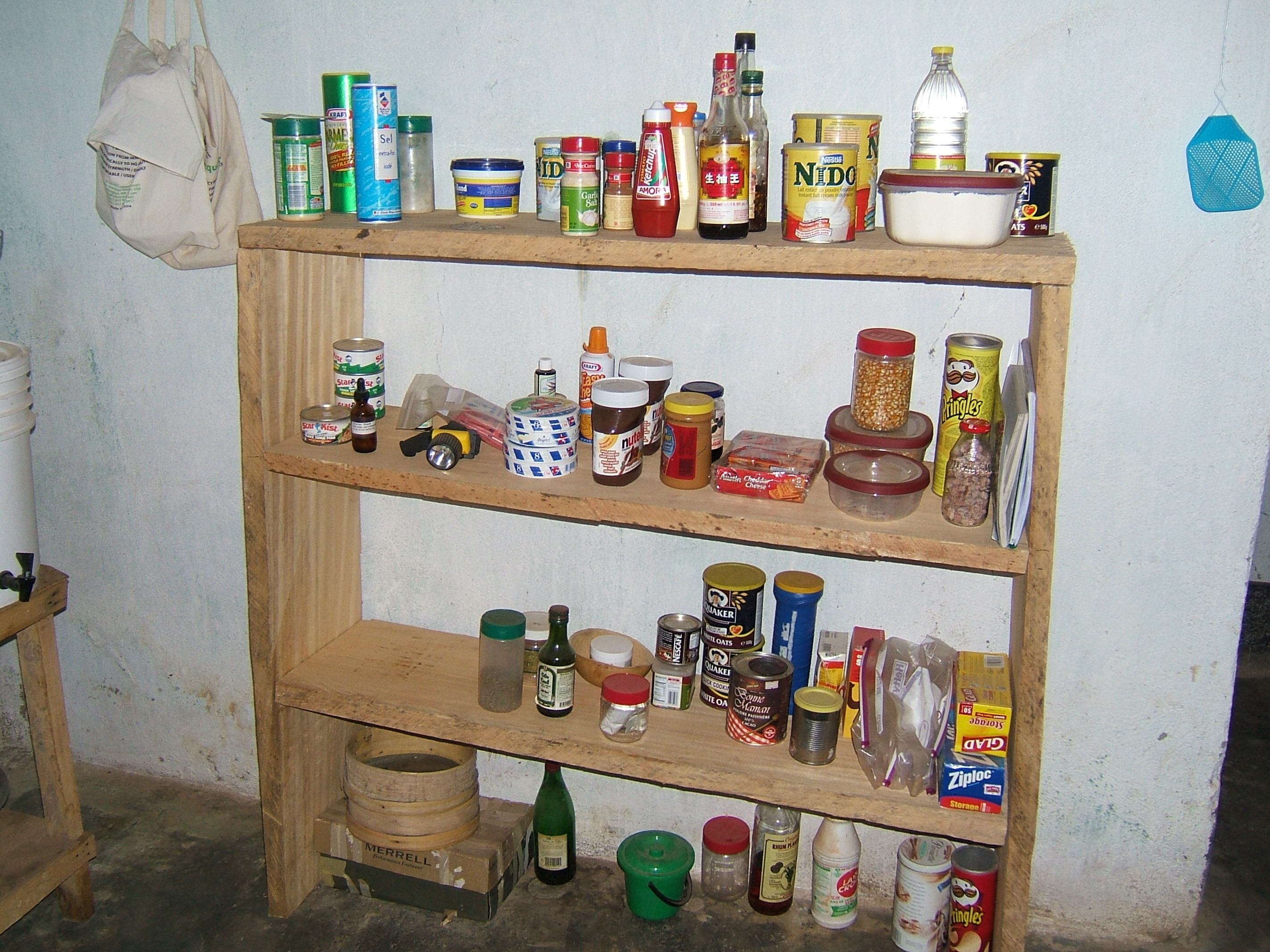
However, there was a small, continuing problem. I had received a care package from my parents in the United States, with a Costco sized bag of Cheez-its as its main prize. I would leave them out on a recently constructed but very uneven shelf that I used as a pantry in my kitchen area. Overnight,  I often heard weird noises and shuffles around my house, but given my deathly fear of bugs at the time, I refused to get out of my impregnable mosquito net fortress (like hiding under the covers as a child, I assumed I was ‘safe’ in there). Yet one morning, I was looking over that beloved box of Cheez-its (as I typically did first thing every day), and saw some scratch marks towards the bottom. Someone, or something, seemed to have been trying to get into them – this was personal now. I told a friend of mine in village about it, and he quickly figure out the issue – some unwanted houseguests had remained even after the intensive clean up, and were now trying to sabotage the one thing making me happy.

In short, there were rats in my house. Not to worry my friend, Dimanche (Sunday in English, as he was born on a Sunday), told me. It was bound to happen and probably will again, but it’s fairly easy to get rid of them with a little poison and a lot of death.  Given closer inspection around my house, the prevailing notion was that instead of just a single newfound roommate, I had in fact a whole family of squatters. Thus we would need to put out a decent amount of poison, probably for multiple nights in a row, to make sure we got all of them.

While I am not a huge fan of genocide, even for rats, I am a huge fan of Cheez-its. If it came down to them versus my prized care package possession, well that was an easy choice. We went out and acquired the poison, placed it strategically right in front of the increasingly crooked pantry shelves (ironically that Dimanche, a builder by trade, had constructed), and mixed it amongst some food (peanut butter, and I even sacrificed a single Cheez-it in order to save the rest) to fool these silly rats into a delicious death. We left it there, and I went into my mosquito net fortress as usual, but with open ears to hopefully hear a sudden stop of all the shuffling in the middle of the night.

The next morning I awoke and went to check the poison area, but I did not have my glasses on. I didn’t see much and assumed it hadn’t worked. Oh well, I went to take a shower – unlike most volunteer houses in Burkina, I had an indoor shower. There was no running water of course, but it just meant there was a small dark room in my house with a tiny pipe leading outside (the type of pipe that various rodents could conceivably easily crawl the other way back in) where I could take a bucket shower indoors (it was the definition of middle class Sideradougou life).

While showering in this 2×2 closet sized room or sorts, I noticed something large near the pipe. I still didn’t have my glasses on and had already begun showering, so I continued, but attempted to stand near the entrance, and away from whatever that motionless thing was. I finished, got dressed, and put on my glasses. When I returned to inspect the brown blob that I had showered with, I was astonished to see that it was a dead rodent. It had worked! I soon walked around my house and saw another dead rodent in the hallway, and two in the kitchen. Never had I been so happy to see dead animals all over the place, my Cheez-its would be safe now! It may have been a bit weird to accidentally ritually cleanse yourself with the dead body of something you had just killed, but hey I was in Burkina Faso now, and a lot of things were a bit weird.

to be continued . . .

Picture 024

The not-so straight pantry shelf that housed my prized care package possessions